


 HOME >
 The Future of Nomex Electrical Insulation in New Energy Vehicles
New energy vehicles are pushing electric motors toward higher power density, higher voltage, faster switching, and tighter packaging. Insulation grows even more important in motor reliability, thermal management, manufacturing, and service life. At Sui On Insulating, we see Arclin (formerly DuPont) Nomex® electrical insulation as a material worth examining because its properties address several electrified-transportation challenges.
Why EV Motor Insulation Is Becoming More Demanding
Traction motors must deliver substantial power from compact packages through repeated acceleration and temperature cycles. As designers pursue higher power density, insulation must withstand electrical stress without taking unnecessary space. It must also tolerate manufacturing and remain stable around varnishes, resins, oils, and cooling media.
This creates a difficult balance. Thicker insulation can reduce space for copper conductors, while thinner materials must retain sufficient dielectric and mechanical performance. Arclin (formerly DuPont) Nomex® 710, for example, was engineered for high-power automotive applications including slot-liner insulation in hybrid and electric vehicle traction motors. Its 0.22 mm thickness was developed with mechanical robustness and electrical performance in mind.
How Nomex® Electrical Insulation Supports Higher Power Density
For future electric motors, insulation thickness and performance need to be considered together. A material that maintains electrical separation while occupying less slot space can give designers more flexibility in copper fill and winding configurations. Arclin notes that Nomex® 710 can enable more copper cross-section in a motor slot, potentially supporting higher output or a more compact motor.
Nomex® electrical insulation also combines properties that are difficult to achieve with a simple polymer film. Arclin describes Nomex® papers as offering dielectric strength, mechanical toughness, thermal stability, chemical compatibility, flame resistance, and cryogenic capability. These characteristics matter when one material must address electrical, thermal, and mechanical demands together.
Thermal Stability Will Remain a Key Differentiator
Heat is one of the central design constraints in electric drive systems. Higher current density and compact motor architectures can increase thermal demands, while insulation must retain its function over the intended operating life. DuPont reports that Nomex® products can retain useful properties during long-term exposure at temperatures up to 220°C, although performance varies by grade and construction.
Our Nomex® aromatic polyamide insulation is specified for continuous service at 220°C as a Class H material. It is constructed from calendered aromatic polyamide fibrid and flock, combining thermal, mechanical, and dielectric performance. Our product information also specifies compatibility with common resins, varnishes, transformer oils, and cooling agents, supporting integration into different insulation systems.
Chemical Compatibility Matters for New Energy Drive Systems
EV motor insulation may encounter materials and fluids beyond traditional motor designs. Compatibility therefore deserves attention during material selection, because performance can change after prolonged contact with other system components.
Arclin states that Nomex® papers are compatible with broad classes of electrical varnishes and adhesives, as well as transformer fluids, lubricating oils, and refrigerants. It also notes demonstrated use in electric vehicle motor insulation and compatibility with automotive fluids such as automatic transmission fluids.
Manufacturing Efficiency Will Shape Future Materials
The future of EV insulation is not only about laboratory properties. Production teams need materials that move reliably through high-volume manufacturing, where slot liners may be cut, formed, inserted, and handled automatically.
Nomex® 710 was developed with automatic manufacturing requirements in mind and highlights its mechanical robustness for thinner insulation. Its automotive documentation also identifies reliability in automatic manufacturing as a benefit.
Prospects for EV Motor Insulation
We expect future development to focus on the interaction between electrical insulation, power density, thermal management, and manufacturing productivity. High-voltage motors will demand engineered insulation systems, while compact architectures will continue to place pressure on thickness and mechanical handling.Arclin has introduced Nomex® High Voltage EV Paper for high-voltage electric motor applications, initially targeting 0.20 mm slot-liner insulation.
For buyers and engineering teams, material selection should move beyond a single temperature rating. We recommend evaluating operating temperature, voltage stress, thickness, mechanical processing, chemical exposure, cooling method, winding design, and certification. The grade should match the actual insulation system rather than being assumed from the Nomex® name alone.
How Sui On Insulating Supports EV Insulation Selection
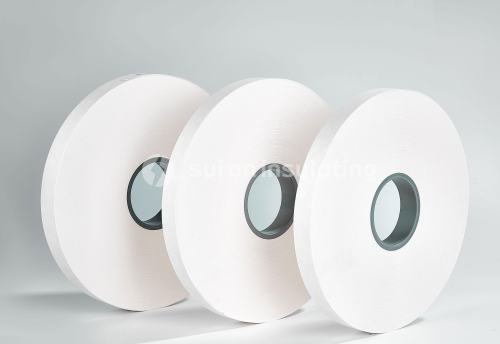
At Sui On Insulating, we provide Nomex® electrical insulation for motors and new energy drive systems. Our listed Nomex® portfolio includes T410, T710, T411, T414, insulation papers, plus insulated cardboard, mica paper, semi-conductive paper, tapes, sleeves, and other forms.
We understand that customers need more than a material name. They need a solution that fits the electrical design, production process, and purchasing requirements. We therefore focus on matching material and form to the application, with product information and processing options for industrial requirements.
Building More Reliable EV Systems with Advanced Insulation
New energy vehicles depend on many technologies working together, and electrical insulation is one of the less visible layers supporting that progress. As motors become smaller, more powerful, and more demanding, materials must combine thermal stability, dielectric performance, mechanical strength, and chemical compatibility.
The push toward higher temperatures and tighter motor packaging is likely to sustain demand for insulation materials such as Nomex®, which combine thermal endurance with a thin, space-efficient profile.At Sui On Insulating, we will continue supporting engineers and purchasing teams with Nomex® insulation solutions and application-focused material selection for evolving vehicle requirements.