


 HOME >
 Optimizing Electrical Manufacturing: Choosing Between Film Sheets and Continuous Rolls
Selecting the right material format is a pivotal decision in modern industrial manufacturing, directly influencing daily production efficiency, material yield, and overall operational costs. Converters must carefully evaluate whether supply materials should be delivered in discrete unit packages or continuous unwind rolls.
High-performance electrical substrates such as Mylar® polyester film and Melinex® polyester film serve as essential dielectric insulation barriers across diverse power applications. Determining whether these polymer films perform better in pre-cut formats or continuous wound spools depends heavily on specific manufacturing machinery.
Material handling requirements vary significantly between manual assembly workstations and fully automated continuous production lines. Choosing between distinct pre-trimmed units and continuous wound spools affects everything from initial tooling setup times to floor space utilization and long-term waste management strategies within facilities.
Converting specialist Sui On Insulating supplies custom converted polymer barriers tailored precisely to specific manufacturing workflows. Our precise slitting and sheeting capabilities enable engineers to integrate high-grade dielectric films seamlessly, regardless of whether your assembly process requires individual blanks or continuous spools.
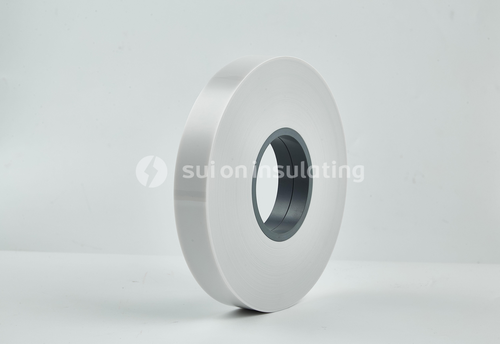
Efficiency and Precision: When to Choose Polyester Film Sheets
For short production runs, rapid prototyping, and specialized electrical component manufacturing, polyester film sheets offer distinct practical advantages. Pre-trimmed sheet formats allow machinery operators to load individual blanks directly into flatbed die-cutters, laser cutting systems, or manual assembly stations without complex web tensioning equipment.
Utilizing individual sheet stock eliminates the need for expensive web guidance machinery and heavy unwind stands during low-volume processing. Operators can easily inspect, handle, and align individual sheets of Mylar® polyester film, ensuring maximum precision when manufacturing intricate electrical insulators or custom dielectric gaskets.
Dimensional stability is another key reason engineers choose discrete sheeted materials for sensitive electrical applications. Pre-cut flat sheets remain completely free from coil set memory, preventing frustrating material curling during precision stamping, screen printing, or secondary adhesive lamination steps across active manufacturing lines.
High-Volume Automation: The Strategic Advantage of Roll Formats
High-volume manufacturing facilities relying on high-speed rotary die-cutting and automated assembly lines benefit immensely from continuous roll formats. Unwinding material directly from spools allows continuous feeding into high-speed processing machinery, maximizing output rates while minimizing manual operator intervention on busy factory floors.
Continuous roll processing drastically reduces costly downtime associated with frequent material loading and machine re-threading cycles. A single continuous roll of Melinex® polyester film can supply automated stamping equipment for hours, ensuring uninterrupted workflow and consistent production speeds during large-scale manufacturing runs.
Web-fed production systems also excel at precise web tension control and high-speed multi-layer lamination processes. Feeding continuous rolls alongside synthetic substrates like Kevlar® aramid fiber or Teflon® PTFE enables automated laminating machinery to produce durable, high-strength composite materials with exceptional physical uniformity.
Warehouse floor space utilization is significantly improved when storing compact, high-density continuous material spools. Stacking tightly wound spools optimizes warehouse storage capacity compared to storing large pallets of flat sheet stock, reducing overall material handling costs across expansive industrial production environments.
Material Yield, Scrap Reduction, and Handling Considerations
Evaluating raw material yield and scrap rates is essential when selecting the ideal material format for your operations. While continuous roll processing reduces leading-edge material waste, improper web tensioning or edge alignment can quickly generate continuous scrap along the entire length of a roll.
Conversely, utilizing pre-dimensioned polyester film sheets allows converter operators to calculate nested die layouts with extreme mathematical precision. Optimizing component placement across individual sheet layouts minimizes edge trim waste, ensuring predictable material utilization rates when converting expensive high-performance dielectric barrier materials.
Contamination control during handling is another critical factor influencing raw format selection across cleanrooms. Specialized converting facilities like Sui On Insulating process both sheets and rolls within dust-controlled environments, preventing particle entrapment and static buildup that could compromise sensitive high-voltage electrical insulation applications.
Matching substrate thickness and mechanical flexibility to your specific feeding mechanism prevents severe processing bottlenecks. Thicker gauge Mylar® polyester film sheets provide structural stiffness for automated vacuum pick-and-place systems, whereas thinner gauges flex easily around continuous unwind rollers during processing.
Making the Right Strategic Choice for Your Manufacturing Line
Determining whether sheets or rolls best suit your facility requires a comprehensive evaluation of equipment capability, order volume, and labor structure. High-speed automated facilities prioritize continuous rolls for maximum throughput, whereas specialized custom shops benefit from the flexibility and agility of discrete sheet stock.
Prototyping projects and custom batch orders benefit significantly from purchasing discrete, pre-trimmed sheet stock. Utilizing pre-dimensioned sheets avoids the high initial setup costs and minimum order quantities often associated with custom slitting continuous rolls for small-scale development projects and rapid testing.
Partnering with experienced converting specialists ensures you receive optimized material formats tailored to your machinery. Sui On Insulating delivers custom slit rolls, precision polyester film sheets, and engineered die-cut components that streamline your manufacturing process, minimize raw material waste, and enhance final product performance.