


 HOME >
 Nomex 410 vs. Nomex 411: How to Select the Right Thickness
Choosing insulation thickness is not simply a matter of selecting the thickest available material. Electrical designers must balance dielectric requirements, mechanical strength, conformability, available space, and manufacturing processes. When selecting Nomex® electrical insulation, understanding the differences between Nomex® 410 and Nomex® 411 can help designers match the material to specific application requirements. Although the two materials share the same chemical composition, their density, construction, thickness options, and processing characteristics make them suitable for different design priorities.
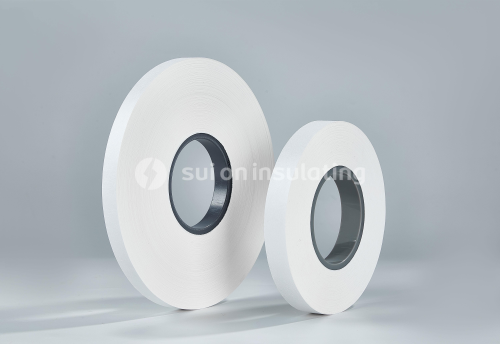
Understanding the Difference Between Nomex® 410 and 411
Nomex® 410 is the original calendered Nomex® insulation paper and is widely used in electrical equipment. According to the manufacturer’s technical data, Nomex® 410 combines high dielectric strength with mechanical toughness, flexibility, and resilience. Its available thicknesses range from 0.05 to 0.76 mm, covering applications where designers need different levels of electrical and mechanical protection.
Nomex® 411 is a lower-density version of Nomex® 410. It is an uncalendered precursor with a density of approximately 0.3 g/cc and is available in five thicknesses from 0.13 to 0.58 mm. Compared with Nomex® 410, it provides lower electrical and mechanical properties but offers higher bulk and conformability.
Why Thickness Matters for Electrical Insulation
Thickness directly affects how an insulation material fits into a design and how much physical separation it can provide. However, thicker does not automatically mean better. Designers must consider the available space around conductors, winding geometry, creepage and clearance requirements, and the electrical stresses expected during operation.
Nomex® 410 provides a particularly broad thickness range. Current technical data lists nominal thicknesses from 0.05 mm to 0.76 mm, including 0.13, 0.18, 0.25, 0.30, 0.38, 0.51, and 0.61 mm. This range allows engineers to select a thickness according to the insulation system rather than relying on one standard gauge.
Nomex® 411 starts at 0.13 mm and extends to 0.58 mm, with nominal options of 0.13, 0.18, 0.25, 0.38, and 0.58 mm. Its lower density gives the material greater bulk at a given thickness, which can be advantageous when conformability and impregnability are more important than maximum mechanical or dielectric performance.
Nomex® 410: When Higher Density Is the Priority
We generally consider Nomex® 410 when a design requires a combination of dielectric performance, mechanical toughness, flexibility, and resilience. Its calendered structure gives it higher density and correspondingly stronger electrical and mechanical properties than Nomex® 411.
The technical data illustrates why thickness selection still needs care. For example, Nomex® 410 has a typical AC rapid-rise dielectric strength of 18 kV/mm at 0.05 mm and 33 kV/mm at 0.38 mm. At 0.76 mm, the listed typical value is 27 kV/mm. These figures demonstrate that dielectric performance does not increase in a simple linear relationship with thickness, so engineers should use actual technical data rather than assume that thicker automatically provides proportionally greater dielectric strength.
For demanding electrical equipment, this combination makes Nomex® 410 a versatile option for sheet insulation. Its established use across electrical equipment also makes it practical for applications where predictable mechanical handling and dielectric performance are important.
Nomex® 411: When Conformability Matters More
Nomex® 411 has a different advantage. Its lower density and uncalendered construction provide higher bulk and improved conformability compared with Nomex® 410. The manufacturer specifically identifies motor phase insulation and transformer coil end filler as applications where these characteristics are valuable.
Nomex® 411 also offers increased impregnability and saturability compared with Nomex® 410. This can be useful when the insulation must absorb or interact with resin during an impregnation process. For engineers working with cast-resin systems, this processing characteristic may be more important than simply maximizing the material’s density.
The choice therefore depends on the complete manufacturing process. If the design requires a material that can conform readily to irregular spaces and accept impregnation effectively, Nomex® 411 can provide a practical solution.
Nomex® Insulation in New Energy Vehicle Drive Motors
These characteristics are also relevant to new energy vehicle (NEV) drive motors, where compact winding structures leave limited room for insulation while exposing materials to heat, vibration, and repeated electrical stress. In such applications, engineers need to consider not only dielectric performance but also how easily an insulation material can conform to the winding structure and integrate with the manufacturing process.
Nomex® 410 can be considered when higher dielectric and mechanical performance is the priority, while Nomex® 411 may be useful where greater bulk, conformability, and impregnability are more important. The appropriate choice depends on the motor architecture, operating temperature, voltage level, available space, and impregnation method, so we recommend evaluating the complete insulation system before selecting a grade or thickness.
Making the Final Choice
For engineers comparing Nomex® 410 and Nomex® 411, the first question should be what the insulation needs to accomplish. If high dielectric and mechanical performance are central priorities, Nomex® 410 offers a strong starting point. If greater bulk, conformability, and impregnability are more important, Nomex® 411 may be better suited to the application.
We should also evaluate temperature, voltage, mechanical stress, winding geometry, impregnation method, and available installation space before confirming a thickness. Both materials have performance data that should be reviewed according to the specific application rather than treated as universal design limits. The manufacturer’s technical sheets explicitly identify the published values as typical data rather than specification limits.
Selecting the Right Nomex® Solution
The difference between Nomex® 410 and Nomex® 411 is not simply a difference in thickness. Their construction and density create different balances of dielectric performance, mechanical properties, bulk, conformability, and processing behavior. Understanding these differences helps electrical equipment manufacturers make more informed material decisions.
At Sui On Insulating, we provide Nomex® electrical insulation for demanding electrical applications and support customers in selecting suitable materials for their designs. By matching the grade and thickness with the complete insulation system, including the requirements of modern drive motors, we can help customers achieve a practical balance between electrical protection, manufacturability, space efficiency, and long-term reliability.