


 HOME >
When it comes to electrical insulation materials, choosing the right product is crucial for ensuring both safety and efficiency in demanding applications. At Sui On Insulating, we have extensive experience providing high-quality Nomex® electrical insulation solutions for industries such as power, energy, data centers, automotive, transformers, and motors. In this article, we explore the differences between Nomex® 410 and standard aramid paper, highlighting why selecting the right insulation can impact performance and reliability.
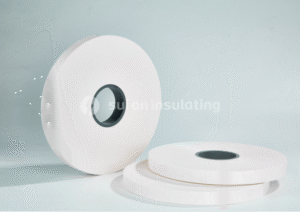
Enhanced Thermal and Mechanical Properties
One of the primary differences between Nomex® 410 and standard aramid paper lies in their thermal and mechanical properties. Nomex® 410 is specifically engineered to provide superior heat resistance and mechanical strength under electrical stress. Its unique molecular structure allows for better dimensional stability at elevated temperatures compared to standard aramid paper. In our operations at Sui On Insulating, we have observed that components insulated with Nomex® 410 maintain integrity in high-temperature environments, which is particularly important for transformers and high-performance electric motors.
Electrical Performance and Reliability
Electrical performance is a critical factor when choosing insulation. Standard aramid paper offers basic dielectric properties suitable for conventional applications, but Nomex® 410 provides enhanced dielectric strength and lower moisture absorption, which translates to greater reliability in long-term use. Our company’s Nomex® electrical insulation products are designed to minimize energy losses and reduce the risk of short circuits or insulation failure. By offering Nomex® 410, we ensure that our clients benefit from higher performance, especially in sectors where stability and endurance are essential, such as data centers and automotive electrical systems.
Application Flexibility and Product Range
Another key distinction is the application versatility of Nomex® 410. While standard aramid paper is limited in thickness and flexibility, Nomex® 410 is available in various grades and thicknesses, making it suitable for complex insulation configurations. At Sui On Insulating, we provide a comprehensive range of Nomex® electrical insulation products, including films, papers, and composite laminates, tailored to client requirements. This flexibility allows engineers and procurement specialists to select solutions that align with both technical specifications and operational constraints without compromising on quality or delivery timelines.
Conclusion: Choosing the Right Insulation
In summary, the differences between Nomex® 410 and standard aramid paper are significant in terms of thermal resistance, mechanical strength, electrical performance, and application versatility. At Sui On Insulating, our extensive product range and industry expertise enable us to recommend the most suitable insulation for your specific needs. By integrating Nomex® 410 into your systems, you benefit from durable, reliable, and high-performing Nomex® electrical insulation, ensuring long-term operational efficiency. Choosing the right insulation is not just a technical decision—it directly supports the reliability and safety of your equipment across power, automotive, data center, and industrial applications.