


 HOME >
 5 Key Reasons to Use Melinex Film in Solar Panels
Solar panels operate outdoors for years, so material selection is critical to module reliability and safety. For manufacturers and engineering teams, the insulating materials inside a photovoltaic module must balance electrical performance, mechanical durability, dimensional stability, and resistance to environmental stress. We at Sui On Insulating recognize these requirements, which is why we offer Mylar® polyester film and Melinex® grades for applications including photovoltaics.
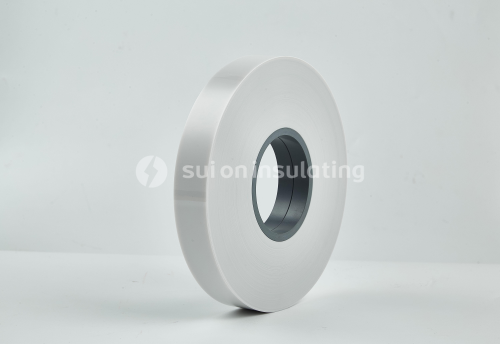
Melinex Film Provides Reliable Electrical Insulation
Electrical insulation is one of the fundamental requirements in solar module construction. A photovoltaic module contains interconnected cells, conductive ribbons, junction boxes, and other electrically active components. Insulating materials help separate conductive elements and reduce the risk of unintended electrical contact.
Polyester films are widely used in electrical insulation because they combine useful dielectric properties with mechanical strength. that polyester materials used in solar backsheets offer excellent electrical insulation and mechanical properties, along with cut-through and tear resistance.
For solar manufacturers, this combination matters because an insulating film must withstand processing and handling while maintaining its protective function. We supply Mylar® polyester film and Melinex® film for photovoltaic applications, giving customers access to established polyester film grades for different insulation and lamination requirements.
Strong Mechanical Properties Support Long-Term Module Construction
Solar modules face more than electrical stress. During manufacturing, transportation, installation, and operation, films can experience handling forces, tension, compression, and other mechanical stresses. A suitable insulating film therefore needs enough strength and dimensional stability to remain dependable within the finished construction.
Mylar® polyester film is a biaxially oriented polyester film produced from PET. Sui On Insulating describes it as having superior tensile strength, chemical stability, and moisture resistance. These characteristics make polyester film useful when manufacturers need a thin material that can contribute both insulation and mechanical durability.
We offer multiple Mylar® and Melinex® grades with different thickness ranges. For example, Mylar® A is available from 12 to 500 μm, while Mylar® EL ranges from 12 to 125 μm. This variety allows engineers to evaluate thickness and performance according to the specific module construction rather than treating every solar application the same way.
Melinex Film Helps Address Moisture and Environmental Exposure
Outdoor photovoltaic systems must contend with changing humidity and environmental conditions. Moisture can become particularly important when it reaches electrical components or contributes to material degradation. Selecting materials with appropriate moisture resistance can therefore be an important part of module design.
Our Mylar® polyester film is specified with moisture resistance and chemical stability, while polyester materials used in photovoltaic backsheets are recognized for their electrical and mechanical properties. However, the performance of a complete solar module depends on its entire material system, including the film, adhesives, encapsulants, and outer protective layers.
This is why we recommend evaluating Melinex® or Mylar® film according to the complete application rather than relying on a single material characteristic. Proper grade selection can help manufacturers build insulation systems suited to their processing conditions and expected service environment.
Mylar® Polyester Film Also Supports New Energy Vehicle Applications
The same combination of electrical insulation, mechanical strength, and dimensional stability can make polyester film relevant beyond photovoltaic modules. New energy vehicle (NEV) drive systems contain motors and other electrical components that operate under repeated thermal cycling, vibration, and electrical stress. As vehicle manufacturers pursue more compact and efficient designs, suitable insulating films can help protect components without adding unnecessary bulk.
Mylar® and Melinex® grades can be evaluated for suitable insulation and component applications within NEV electrical systems, depending on the required thickness, temperature range, dielectric performance, and processing method. We can help customers assess the appropriate film specification according to the actual operating conditions rather than assuming that one grade fits every automotive application.
Managing Temperature and Certification Requirements
Solar modules experience temperature changes throughout their operating life, making thermal performance another consideration when selecting insulating materials. Our product information lists a temperature resistance range of 105–130°C and identifies UL E93687, RoHS, REACH, and MSDS information for the Mylar® special film/Melinex® offering.
Insulation documentation also identifies both Mylar® polyester film and Melinex® polyester film among materials used in UL-recognized insulation systems. For professional buyers, such information can support material evaluation and qualification processes, although the suitability of a particular grade should always be confirmed against the requirements of the finished product and applicable standards.
Choosing the Right Polyester Film for Solar Applications
“Melinex film for solar panels” refers to different material specifications. Engineers should consider required thickness, electrical insulation performance, mechanical requirements, thermal conditions, moisture exposure, lamination process, and the construction of the finished module before selecting a grade.
We at Sui On Insulating provide Mylar® polyester film and Melinex® film in sheet and roll formats, with standard widths of 1,000–1,450 mm and A4-size samples available according to our product information. This enables customers to assess material suitability before committing to a production specification.
Building More Reliable Solar Modules with Sui On Insulating
Solar module reliability depends on many interconnected materials, and insulating film is an important part of that system. From electrical insulation and mechanical strength to moisture resistance, grade flexibility, and thermal considerations, Mylar® polyester film and Melinex® film can provide valuable material options for photovoltaic applications. We at Sui On Insulating combine these established film products with our insulation-material expertise to help professional customers evaluate suitable solutions for their solar and electrical applications.