


 HOME >
 Why Transformer OEMs Select Sui On Insulation Films for Their Applications
Transformer OEMs need insulation materials that support electrical reliability, thermal performance, efficient manufacturing, and consistent production. The right material must also fit the transformer design and processing requirements without creating unnecessary complexity in the supply chain. At Sui On Insulating, we understand these priorities because we provide insulation materials for transformers, motors, generators, and other industrial equipment. Our approach combines application knowledge, material selection, and processing capabilities to support demanding OEM projects.
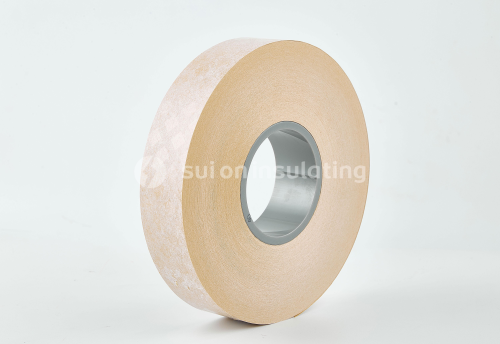
Why Transformer OEMs Need Specialized Insulation Materials
Transformer insulation is not simply a barrier between conductive components. It forms part of the overall insulation system that must withstand electrical, thermal, and mechanical stresses during operation. IEC 60076-11, for example, specifically addresses dry-type transformers and their performance requirements, while IEC standards also distinguish electrical insulating materials from complete insulation systems.
For OEMs, this means material selection needs to begin with the transformer design. Interlayer insulation, winding insulation, and other components may require different material structures and properties. We therefore focus on matching insulation products with the specific application instead of treating every transformer project as identical.
Choosing Electrical Insulation Material Suppliers with Application Expertise
Working with experienced electrical insulation material suppliers can simplify both engineering and procurement. OEMs often need more than a roll of material. They may require guidance on material construction, dimensions, processing, application suitability, and compatibility with the manufacturing process.
We provide a broad insulation portfolio covering dry-type transformers, oil-immersed transformers, motors, generators, and new energy drive systems. Our website also identifies dry-type transformers as a dedicated application area, reflecting our focus on industrial insulation rather than general-purpose material supply.
This application-oriented approach helps us communicate with engineering and purchasing teams using the technical requirements that matter to their projects.
Soflex® BT25800 for Class H Transformer Applications
One example of our specialized offering is Soflex® BT25800, an H Grade GHG pre-impregnated fabric. It is a flexible composite material made by coating polyimide Sui On Insulation film on both sides with adhesive, laminating it with alkali-free glass cloth, and impregnating the structure with an H-grade resin for low-temperature semi-curing.
This layered construction combines different material functions within one composite. For transformer OEMs, that can be useful when the application requires a flexible insulation material designed for specific thermal and structural conditions rather than a single-layer film.
Product Specifications That Support OEM Requirements
Soflex® BT25800 has a listed temperature resistance grade of 180°C. Its standard width is 1,000 mm, while optional widths range from 2.5 to 1,000 mm. Available thicknesses are 0.20 mm, 0.25 mm, and 0.30 mm. These specifications give OEM engineers defined parameters for evaluating the material against their transformer construction and manufacturing process.
We also supply BT25800 tubing cores with a 3-inch inside diameter. The material can be supplied in full rolls or cut into strip trays or sheets according to customer requirements. This flexibility can be valuable for manufacturers working with different production formats.
Designed for Class H Dry-Type Transformers
Soflex® BT25800 is specifically listed as suitable for Class H dry-type transformers as interlayer insulation. Its application range also includes Class H motors for slot insulation, turn-to-turn insulation, and liner insulation.
The Class H designation is relevant because thermal classification provides a framework for evaluating electrical insulation according to thermal endurance. IEC 60085 explains the distinction between thermal classes for electrical insulating materials and complete electrical insulation systems.
For OEMs, this reinforces an important principle: a material’s thermal class should be considered together with the complete insulation-system design and the actual operating conditions.
Supporting Insulation Needs in New Energy Vehicles
The same insulation expertise also applies to new energy vehicle applications. Insulation films and composite materials can be used around motors and electrical drive components where compact construction, electrical insulation, and thermal endurance are important.
As vehicle electrification increases electrical and thermal demands within drive systems, material selection becomes increasingly important. Our insulation portfolio and processing capabilities can therefore support manufacturers developing components for new energy vehicle powertrain systems.
Quality Systems and Documentation Matter
Consistent quality is another reason OEMs evaluate suppliers beyond the product name. At Sui On Insulating, our website states that we operate under ISO 9001, ISO 14001, and IATF 16949 system certifications, with manufacturing and processing capabilities developed around industrial insulation applications.
For BT25800 specifically, our product information lists UL, RoHS, REACH, and MSDS certificates. It also identifies the applicable system certifications and provides detailed information on thickness, width, packaging, storage, and applications.
Building a Reliable OEM Insulation Partnership
Transformer OEMs ultimately need more than individual material properties. They need a supplier that understands how insulation fits into transformer construction, production, quality control, and long-term equipment reliability. We position Sui On Insulating around this broader requirement, providing insulation materials and processing support for transformers and other electrical equipment.
Our Soflex® BT25800 is one example of how we combine a defined composite construction with application-specific specifications for Class H dry-type transformers. By considering material structure, thermal classification, dimensions, processing format, documentation, and application together, we help OEM customers make more informed insulation decisions. For transformer manufacturers seeking dependable electrical insulation material suppliers, we believe this application-focused approach provides a practical foundation for long-term cooperation.