


 HOME >
 Why Transformer Insulation Plays a Key Role in Data Center Reliability
Power reliability is critical to data-center operations. Transformers sit at a critical point in this infrastructure, converting voltage levels needed by power distribution systems while supporting sensitive IT loads.
Reliable transformer insulation is essential because insulation failure can contribute to electrical faults, downtime, equipment damage, and costly maintenance. We at Sui On Insulating help address these requirements with insulating materials designed for demanding transformer applications.
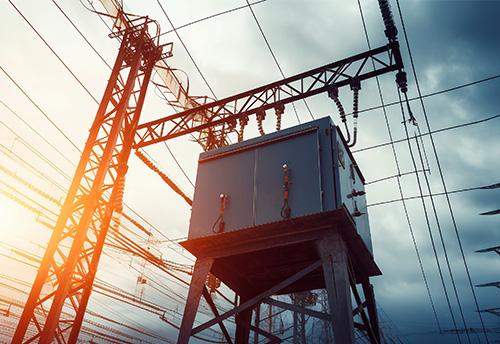
Why Data Centers Put Greater Pressure on Transformers
Modern data centers require highly reliable power distribution because servers, storage systems, networking equipment, cooling systems, and auxiliary infrastructure must remain operational around the clock. Power quality and electrical continuity are therefore central to facility reliability.
Transformers used in these environments may also encounter demanding thermal and electrical conditions. Increasing computing density can raise power requirements, while nonlinear loads and power-electronic equipment can introduce harmonic currents. Transformer designs consequently need insulation systems that remain dependable under their intended operating conditions.
This is where transformer insulation becomes more than a basic protective layer. It helps electrically separate conductive components, maintain dielectric strength, and support the transformer’s overall service reliability.
How Transformer Insulation Supports Electrical Safety
The primary function of insulation is to prevent unwanted electrical conduction between components that operate at different potentials. A transformer contains windings, conductors, cores, and structural components that must maintain appropriate electrical separation.
Effective insulation helps control the electrical field around these components and reduces the risk of breakdown. If insulation deteriorates because of excessive temperature, moisture, mechanical stress, contamination, or electrical aging, the probability of insulation failure can increase.
For data-center operators, the consequences can extend beyond the transformer itself. A transformer fault can interrupt downstream power distribution and potentially affect critical loads. Selecting suitable insulation materials is therefore an important part of designing a reliable electrical infrastructure.
Why Dry Type Transformer Insulation Matters
Dry-type transformers use solid insulation systems rather than liquid insulation for their primary dielectric medium. This makes the characteristics of dry type transformer insulation particularly important to the transformer’s electrical, thermal, and mechanical performance.
At Sui On Insulating, we supply insulating materials for dry-type transformers that help manufacturers balance electrical performance with mechanical and thermal requirements.
Managing Heat and Thermal Aging
Heat is one of the most important factors affecting transformer insulation. Electrical losses generate heat during operation, while the surrounding environment and transformer loading influence how effectively that heat can be dissipated.
Excessive temperature can accelerate aging in many insulation systems. For data-center applications, where electrical equipment may operate continuously and reliability expectations are high, thermal management therefore deserves close attention.
We consider thermal requirements when supplying insulation materials for transformer applications. Depending on the design, manufacturers may select different films, papers, composites, laminates, or other insulation components according to the required insulation class and operating conditions.
Supporting Reliability Under Harmonic Loads
Data centers increasingly use power-electronic equipment, including uninterruptible power supplies and other systems that can influence the electrical characteristics of loads. Harmonic currents can increase losses and contribute to thermal stress in transformers.
The insulation system does not eliminate harmonic effects by itself, but appropriate material selection can support the transformer’s ability to operate within its intended thermal and electrical design limits.
This is one reason we take an application-oriented approach to dry type transformer insulation. Rather than evaluating a material only by a single specification, we consider how its electrical, thermal, mechanical, and environmental characteristics fit the complete transformer design.
Moisture Resistance and Environmental Conditions
Moisture can be another concern for transformer insulation, particularly during storage, transportation, installation, or operation in environments where humidity varies. Moisture absorption can influence insulation properties and may increase the risk of electrical problems under certain conditions.
Our insulating-material solutions are selected for applications where moisture resistance and environmental durability are important considerations. For transformer manufacturers, choosing suitable materials can help create insulation systems better adapted to the conditions in which the equipment will be installed.
This becomes especially relevant when data centers operate in different climates or when transformers are installed in spaces with changing environmental conditions.
Nomex® in New Energy Vehicle Applications
As electric and hybrid vehicles place greater demands on motors and high-voltage drive systems, insulation materials must provide reliable electrical separation while withstanding thermal and mechanical stress. Nomex® insulation can be used in motor slot insulation, phase separation, barriers, and other components where compact, dependable insulation is required.
We also consider Nomex® materials for new energy vehicle applications where space, weight, voltage, and temperature requirements must be balanced. Selecting the appropriate insulation construction can help support reliable motor and electrical-system performance while fitting practical manufacturing requirements.
Reducing Size and Weight Without Ignoring Reliability
Data-center infrastructure is also subject to space and efficiency constraints. Electrical rooms and equipment areas need to accommodate transformers, switchgear, UPS systems, cooling infrastructure, and other essential equipment.
High-performance insulating materials can support manufacturers in optimizing insulation structures and reducing unnecessary material volume and weight. However, compact design should never come at the expense of required dielectric or thermal performance.
We therefore encourage engineers to evaluate material thickness, dielectric requirements, thermal class, mechanical strength, and processing characteristics together. A balanced insulation system can support both equipment optimization and dependable operation.
Building a More Reliable Power Infrastructure
Data-center reliability begins with the electrical infrastructure supporting every critical load. Transformers are an essential part of that infrastructure, and their insulation systems influence safety, thermal behavior, durability, and service life.
We at Sui On Insulating believe effective transformer insulation should be selected according to the complete operating environment rather than one isolated specification. For dry-type transformer manufacturers, appropriate dry type transformer insulation can help address electrical, thermal, mechanical, and environmental requirements while supporting more efficient equipment design. By combining suitable materials with sound transformer engineering, manufacturers can build power equipment better prepared for the continuous demands of modern data centers.