


 HOME >
 The Vital Role of Dielectric Strength in Kapton® HN Film for Transformer Safety
In modern high-voltage power networks, maintaining dielectric integrity is essential for asset safety. We recognize that electrical transformers experience severe voltage spikes and elevated temperatures, demanding advanced flexible insulation materials capable of preventing catastrophic electrical breakdown.
At Sui On Insulating, we supply high-performance flexible insulation solutions engineered specifically for global equipment manufacturers. We process specialized polyimide film structures designed to enhance transformer structural safety and ensure long-term operational reliability across demanding industrial power grid networks.
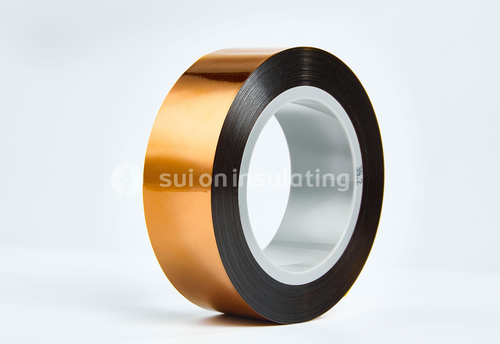
Decoding Dielectric Strength in Kapton® HN Film
Dielectric strength represents the maximum electric field an insulating material can safely withstand without experiencing dielectric breakdown. We rely heavily on high-density polyimide sheets that maintain exceptionally high breakdown voltage ratings even when converted into ultra-thin profile dimensions.
Standard Kapton® HN film demonstrates exceptional intrinsic dielectric performance, achieving breakdown voltage thresholds exceeding 200 kV/mm depending on sheet thickness. This high dielectric capacity enables customer engineers to reduce insulation volume while maintaining robust electrical containment boundaries inside compact transformer coils.
Besides high breakdown voltage resistance, our Kapton® HN film retains its fundamental dielectric properties across extreme thermal ranges. Operating reliably from −269 °C up to continuous elevated thermal limits exceeding 400 °C, the material retains structural flexibility, dimensional stability, and consistent electrical resistance.
Mitigating Electrical Failure Modes in Transformer Coils
Preventing phase-to-ground short circuits in dry-type transformers requires dielectric barriers capable of resisting continuous electrical stress. When we supply high-grade Kapton® film for placement between primary and secondary windings, it prevents high-voltage flashovers, preserving active coil structures and protecting critical downstream power distribution equipment.
In liquid-filled transformers, partial discharge activity often initiates severe internal insulation degradation over time. Kapton® HN provides high dielectric strength, but applications involving sustained corona or partial discharge should consider insulation grades specifically designed for improved corona resistance, such as Kapton® CRC.
Thermal overload conditions represent another major threat to structural transformer insulation integrity. Outstanding thermal endurance allows Kapton® film to withstand severe temporary temperature spikes without melting or softening, safeguarding transformer assemblies against catastrophic thermal runaway failures under heavy continuous electrical loads.
Composite Laminates and Advanced Dielectric Systems
We combine pure polyimide sheets with porous aramid papers to create highly effective flexible composite insulations. Multi-layer laminates like Nomex®-Kapton®-Nomex® (NKN) triplex structures combine the extreme dielectric strength of Kapton® HN film with the superior varnish absorption and mechanical toughness of meta-aramid outer sheets.
In these flexible triplex laminate configurations, the central polyimide core serves as the primary dielectric barrier against high-voltage breakdown. The outer aramid layers absorb impregnating resins during vacuum pressure processing while protecting the delicate central Kapton® film from mechanical friction and abrasion during coil winding.
We design these advanced composite insulations to allow transformer manufacturers to achieve higher power ratings within compact housing footprints. Maximizing dielectric strength per unit thickness enables tighter coil winding geometries, improved heat dissipation efficiency, and lower overall transformer core and coil manufacturing expenses.
Precision Converting Standards for Uncompromised Dielectric Integrity
Kapton® HN can be laminated, metallized, punched, formed, or adhesive coated, making it a recommended choice for applications requiring a well‑balanced set of properties across a wide temperature range.
We know slitting and converting operations significantly impact the final dielectric performance of flexible polyimide materials. Microscopic edge burrs, slitting dust, or mechanical micro-fractures created during high-speed cutting operations introduce localized electric field concentrations, reducing total breakdown voltage strength during high-voltage equipment operation.
To preserve raw material properties, we at Sui On Insulating operate precision roll slitting, cleanroom laminating, and automated die-cutting facilities. Our strict manufacturing protocols guarantee smooth, burr-free material margins, preventing mechanical edge tearing and preserving maximum dielectric capacity across all pre-slit coil production batches.
Furthermore, our quality control testing verifies material thickness uniformity, tensile strength, and dielectric breakdown voltage across shipments. Rigorous inspection protocols at Sui On Insulating ensure every converted batch of Kapton® HN film strictly conforms to exact customer specifications and international high-voltage safety standards.
Deployment Across High-Voltage Power Infrastructure
Dense urban power distribution transformers require compact, highly reliable dielectric insulation architectures. Utilizing thin Kapton® film layers permits compact coil spacing, allowing utility engineers to install high-capacity power transformers inside space-constrained underground vaults and substations without compromising total system safety or operational margins.
Renewable energy step-up transformers encounter severe harmonic distortions and rapid voltage fluctuations from solar and wind inverters. High-grade Kapton® HN film provides resilient dielectric isolation, resisting thermal aging and partial discharge fatigue caused by high-frequency electrical transients in modern green power generation networks.
Specialized traction transformers and industrial drive units also benefit from our advanced flexible polyimide insulation systems. Resisting intense mechanical vibration, rapid thermal cycling, and heavy overloads, Kapton® film ensures continuous electrical containment across demanding railway transport networks and heavy industrial automated manufacturing facilities.
Strategic Material Selection for Long-Term Asset Safety
Selecting the correct dielectric thickness and composite structure requires careful analysis of operational dielectric stress profiles. Technical collaboration between equipment builders and our experienced insulation converters ensures optimal dielectric material specification, balancing thermal dissipation efficiency with robust electrical breakdown safety margins.
Through our technical expertise and extensive raw material inventory, we support global transformer builders with custom-converted polyimide solutions. Delivering precision-slit narrow rolls and custom die-cut components empowers equipment manufacturers to elevate product quality while optimizing factory coil winding assembly workflows.
Sustained innovation in global electrical power infrastructure relies on high-performance dielectric materials. By providing superior dielectric breakdown strength, thermal stability, and mechanical durability, our Kapton® HN film products remain foundational for ensuring safe, efficient, and resilient electrical transformer operation worldwide.