


 HOME >
In the landscape of modern industrial electrical engineering, industry professionals constantly battle the invisible enemies of system longevity: thermal degradation, electrical breakdown, and mechanical fatigue. Long-term operational engagement at Sui On Insulating covers cooperation with countless B2B clients across the energy, transportation, and data center sectors who face these exact threats. When designing or repairing high-voltage equipment, the material choice is not just a specification—it is a critical engineering decision that dictates the operational lifespan of the entire asset. This is precisely why Nomex insulation has become a cornerstone of the company’s material portfolio.
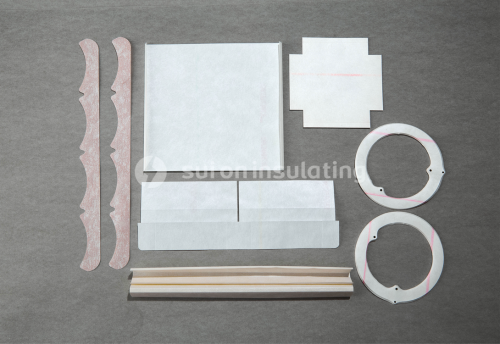
Discussions regarding electrical system architecture with clients frequently turn to the limitations of standard film or paper-based insulators. While conventional materials might suffice for low-stress environments, they often fail under the extreme conditions found in modern high-performance motors or power transformers. This is where a high-performance Nomex® sheet proves its worth. Originally developed by the innovative material scientists now part of Arclin formerly DuPont, this meta-aramid material was engineered specifically to bridge the gap between mechanical toughness and exceptional dielectric performance.
Addressing Thermal Instability
The most persistent problem in electrical system design is thermal management. As we push for higher power densities in smaller footprints—a trend we see prominently in the electric vehicle and renewable energy sectors—the operating temperatures of coils and windings have surged. Standard insulation materials often become brittle or lose their insulating properties when subjected to prolonged heat. A high-quality nomex sheet is designed to thrive in these conditions. It maintains structural integrity and electrical properties at temperatures up to 220°C, providing a robust “safety buffer” for equipment subjected to overload conditions or high-ambient-temperature environments.
At Sui On Insulating, abundant practical cases demonstrate how utilizing Nomex insulation as slot liners or phase insulation effectively mitigates the risk of winding-to-winding shorts caused by insulation breakdown. By providing a stable dielectric barrier that resists thermal oxidation, this material allows engineers to design systems that are not only more compact but significantly more reliable over decades of service.
Mitigating Electrical Failure and Dielectric Stress
Another challenge we solve for our industrial partners is the management of transient electrical stress. High-voltage transients, such as those caused by switching surges or atmospheric lightning strikes, can easily puncture weaker dielectric barriers. The intrinsic dielectric strength of a nomex sheet is one of its most defining features. Because of the uniform density and high crystalline structure inherent in this meta-aramid material, it provides a consistent, high-threshold barrier against both constant electrical stress and sudden surges.
Moreover, the physical robustness of nomex insulation means it resists the “pin-hole” punctures that can occur during the winding process. In an automated manufacturing environment, the physical stress placed on insulation paper is immense; if a material tears or nicks during assembly, it creates a point of failure that may not manifest until the machine is fully operational in the field. Our team at Sui On Insulating emphasizes that using a material that is physically tough—resisting both tear and burst—is a critical insurance policy against manufacturing defects.
Operational Resilience in Harsh Environments
Beyond temperature and voltage, our B2B clients often face environmental threats that demand specialized material properties. Whether it is moisture ingress in outdoor power distribution equipment or chemical exposure in industrial chemical-processing motors, standard insulation often fails prematurely. Because nomex insulation is naturally resistant to many solvents, acids, and bases, it remains stable even when the operational environment is less than ideal.
When collaborating with clients to select suitable Nomex sheets tailored to unique application scenarios, technical specialists prioritize matching material density and thickness to the physical demands of each use case. Whether specifying high-density Type 410 for rigorous electrical barrier applications or thinner variants for space-limited winding structures, the versatile properties of this material enable targeted, customized solutions for systemic engineering challenges. Drawing on 40 years of industry expertise, the technical team at Sui On Insulating processes and converts these materials to ultra-precise dimensional tolerances, guaranteeing delivered products are fully prepared for direct integration into clients’ production lines.
Choosing the Right Partner for Insulation Solutions
Solving these engineering problems requires more than just high-quality materials; it requires a deep understanding of the application context. Engineers at Sui On Insulating aim to simplify complex engineering challenges. Industry teams universally acknowledge that procurement departments prioritize stable supply chains while design engineers demand reliable material performance guarantees. By maintaining a robust inventory of aramid-based solutions from Arclin formerly DuPont, the company ensures partners will never face production halts caused by raw material shortages.
In conclusion, thermal degradation and dielectric breakdown are not unresolvable issues, and they demand strict, standardized material selection protocols. Integrating high-performance insulation products such as Nomex insulation into electrical system designs represents a long-term investment in the exceptional durability that defines industrial-grade equipment performance. All industry stakeholders are welcome to contact the technical team at Sui On Insulating to address specific operational pain points of their electrical systems. Joint technical reviews can identify whether customized material configurations with optimized thickness, density and shape specifications will substantially boost the long-term reliability of power equipment. When safeguarding the core components of technical systems, enterprises deserve a collaborative supplier that recognizes insulation materials carry equal critical importance to copper conductors.