


 HOME >
In the high-voltage electrical engineering and power distribution sectors, dry-type transformers are widely considered the gold standard for safety and durability. Because they do not rely on flammable dielectric liquids, these units are highly specified for indoor installations, critical data center grids, new energy vehicle charging networks, and rapid transit systems. However, removing liquid coolants means the solid insulation system bears the entire burden of thermal and electrical stress. At Sui On Insulating, we have spent over 40 years deeply cultivating advanced materials to provide high-end clients with premium, systematic insulation solutions. As transformer manufacturers continuously strive to optimize their designs for greater efficiency and compact footprints, a critical question consistently arises: is it necessary to invest in premium nomex transformer insulation systems, or can generic alternative papers deliver acceptable results at a lower initial cost? In this comprehensive performance review, we will dissect the mechanical, chemical, and thermal properties of both paths to provide an objective, B2B-focused comparison.
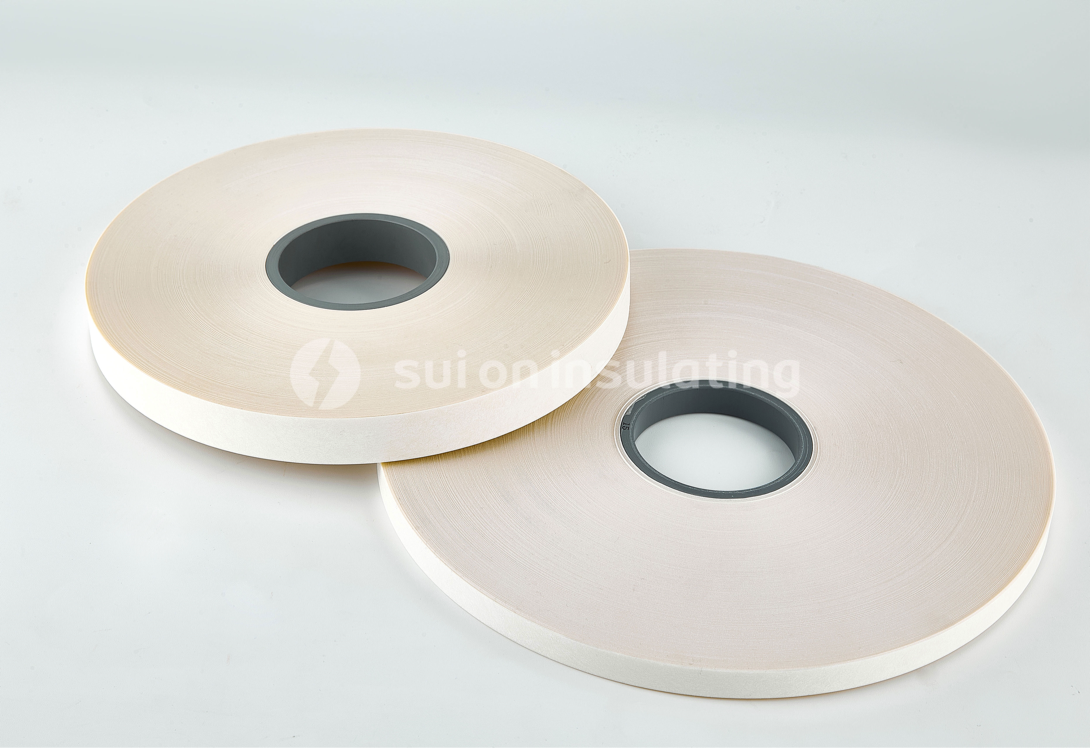
The High-Stress Reality of dry type transformer insulation Systems
To understand why material selection is so critical, one must first look at the harsh environmental conditions inside a modern dry-type transformer. Unlike liquid-immersed units where oil circulates to dissipate heat, dry-type transformers rely on ambient air or forced ventilation. Consequently, their internal hot spots are significantly hotter, requiring the insulation system to comfortably operate under Class H (180°C) or Class R (220°C) thermal ratings.
During normal operations, the solid barrier is subjected to continuous electrical fields and localized partial discharges. Furthermore, heavy industrial loads generate massive mechanical vibrations and electromagnetic forces that try to tear the physical components apart. Because the relationship between operating temperature and insulation life is highly exponential—where every 10°C increase beyond a material’s design limits effectively cuts its operational lifespan in half—any compromise in the quality of your dry type transformer insulation can lead to rapid thermal runaway. When insulation embrittles, cracks, or shrinks, catastrophic dielectric breakdown is practically guaranteed, resulting in costly downtime.
Why Premium nomex transformer insulation Outperforms Generic Substitutes
When we evaluate premium synthetic papers, Arclin(formerly DuPont)® Nomex® stands as the undisputed industry benchmark. To understand its unparalleled performance, we must look at the specific physical characteristics that define its chemical structure. Arclin(formerly DuPont)® Nomex® is a high-density, calendered aramid polymer that exhibits a rare combination of high inherent dielectric strength and exceptional mechanical toughness.
Specifically, in its densified sheet form, it safely withstands short-term electrical stresses ranging from 18 to 40 kV/mm depending on the exact material thickness. From a thermal standpoint, temperatures up to 200°C have virtually zero impact on its electrical or mechanical properties. Even under a continuous thermal load of 220°C, it reliably maintains its structural integrity and dielectric strength for at least 10 years of continuous use. It does not melt, flow, or soften, even during short-term emergency exposures as high as 300°C.
Furthermore, Nomex® is highly flame-resistant. Its Limiting Oxygen Index (LOI) at 220°C remains safely above 20.8%, meaning it will not support combustion in normal air. This critical safety margin is vital for indoor dry-type installations where fire mitigation is a strict legal mandate. Its outstanding chemical compatibility also ensures it integrates flawlessly with all major classes of impregnating varnishes, resins, and industrial solvents, facilitating a complete, void-free vacuum pressure impregnation (VPI) cycle.
Evaluating Generic Alternatives: Where Do They Fall Short?
In contrast, generic meta-aramid papers and low-cost polyester-based laminates (such as basic DMD or low-end polyester films) are frequently marketed as cost-effective substitutes. While these generic materials may appear to match premium papers on initial spec sheets, their performance quickly deteriorates under continuous industrial stress.
Our laboratory testing and field evaluations reveal several critical weaknesses in generic alternatives. First, generic papers suffer from poor dimensional stability under prolonged thermal stress. At elevated temperatures near Class H limits, they undergo significant heat shrinkage, which can pull the insulation away from the copper conductors, exposing vulnerable edges. Second, generic materials often lack the mechanical tear resistance required to survive high-tension automatic coil winding processes. Under heavy mechanical tension, lower-grade papers develop micro-tears that compromise their dielectric barrier before the transformer is even turned on. Finally, generic substitutes are highly sensitive to moisture. While densified Nomex® paper retains 90% of its bone-dry dielectric strength even at 95% relative humidity, generic alternatives absorb moisture rapidly, leading to accelerated chemical aging, embrittlement, and premature dielectric breakdown.
Customized System Integration: The Sui On Insulating Standard
In the B2B sector, providing raw insulation materials is only half the equation. To truly elevate power grid reliability, those materials must be expertly converted, laminated, and customized. At Sui On Insulating, we maintain state-of-the-art, fully certified testing and production facilities to transform raw substrates into high-performance composite systems.
Through our proprietary, UL-certified SOFLEX® brand of composite and coated products, we combine different high-performance substrates to deliver tailored solutions. For applications requiring extreme dielectric strength in tight physical spaces, we laminate Nomex® with Qnity(formerly DuPont)® Kapton® polyimide film or highly stable Mylar® polyester films. By leveraging our complete in-house manufacturing lines, we guarantee quick service matching and fast delivery schedules. This agility allows our global B2B clients to accelerate their prototyping phases and comfortably meet tight production deadlines. With our manufacturing processes strictly certified to ISO 9001, ISO 14001, and IATF 16949 standards, we provide the ultimate quality guarantee for critical energy infrastructure.
Conclusion: Making the Right Engineering Investment
Ultimately, the choice between premium substrates and cheaper alternatives is a question of long-term operational integrity versus short-term procurement savings. While generic materials might look appealing on paper, they introduce unacceptable risks of catastrophic failure in demanding B2B environments. For operations that cannot afford a single minute of downtime, investing in premium materials remains the most financially sound decision. At Sui On Insulating, we are fully committed to helping our global partners engineer the safest, most reliable dry-type electrical systems on the market today. Contact us to learn how we can customize high-performance insulation systems to fit your exact operational requirements.