


 HOME >
 Kapton Material for Aerospace vs. Automotive: Key Differences in Requirements
Selecting insulation materials for aerospace and automotive systems requires more than comparing temperature ratings or dielectric performance. Each industry exposes materials to a different combination of thermal, mechanical, electrical, chemical, and environmental stresses. Qnity (formerly DuPont) Kapton® material is widely recognized for combining these properties in a flexible polyimide film. At Sui On Insulating, we see this balance as particularly valuable for engineers and procurement teams evaluating insulation for demanding applications.
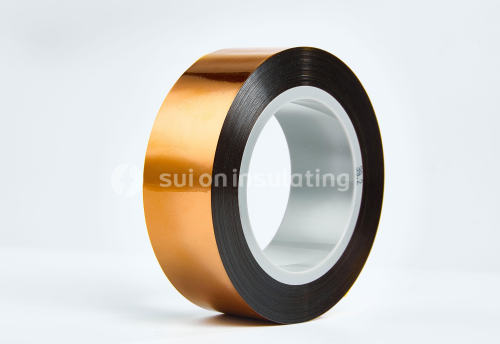
Why Kapton® Material Fits Demanding Applications
Kapton® polyimide film is designed for applications where stable performance under specific operating conditions is essential. Its value comes from the combination of electrical, thermal, chemical, and mechanical properties rather than from one characteristic alone. Qnity describes Kapton® film as capable of maintaining these properties under demanding environments, including extreme temperatures and vibration.
The material is also available in different grades for different engineering priorities. For example, Qnity identifies HN as a general-purpose film, while other Kapton® families are designed for conductive, thermally conductive, corona-resistant, or enhanced chemical-resistance requirements. This means engineers should select the grade according to the actual application rather than treating every Kapton® film as identical.
Aerospace Prioritizes Extreme Environmental Stability
Aerospace applications place unusually high demands on insulation materials. Components may experience substantial temperature changes, vibration, vacuum, radiation, and severe weight constraints depending on the application. Spacecraft thermal-control systems, for example, use multilayer insulation blankets to control heat gain and heat loss, with aluminized Kapton® film used in outer layers of these systems.
For aerospace engineers, long-term stability can therefore be more important than simple cost optimization. The material must continue performing when maintenance opportunities are limited and environmental conditions can be difficult to reproduce during ordinary testing. NASA’s James Webb Space Telescope is one example where ultra-thin Kapton® polyimide films were used as part of the thermal protection system against solar heat and radiation.
Weight and dimensional considerations also matter. A flexible film can provide insulation without adding the bulk associated with thicker conventional materials. This supports compact designs while helping engineers manage thermal and electrical requirements within constrained aerospace assemblies.
Automotive Applications Emphasize Production and Electrification
Automotive requirements are different because components must operate reliably while also supporting high-volume manufacturing, compact packaging, cost control, and increasingly electrified powertrains. Modern vehicles contain numerous electrical systems, motors, batteries, sensors, and electronic assemblies where insulation must remain stable through repeated thermal and mechanical cycles.
Kapton® film has applications in automotive electrical systems, including insulation and formed components. Qnity technical forming guide specifically discusses Kapton® HN and JP films for industries including automotive applications. Sui On Insulating also lists H/HN grades for electrical insulation and automotive diaphragms and manifolds, while MT+ and EWS grades are identified for new-energy vehicle motors and electromagnetic wires.
For automotive manufacturers, process compatibility can be just as important as material performance. Films may need to be slit, formed, laminated, wrapped, or integrated into automated production processes. Consistent dimensions and predictable forming behavior can therefore influence both product reliability and manufacturing efficiency.
Electrical Performance Remains Critical in Both Industries
Although aerospace and automotive applications have different priorities, electrical insulation remains a shared requirement. Kapton® polyimide film is valued for its dielectric performance and resistance to changes in electrical properties across temperature ranges. Qnity’s property data shows that extreme temperature changes have relatively limited effects on the room-temperature electrical properties of Kapton® HN film.
The exact electrical requirement, however, depends on the application. Aerospace systems may demand stable insulation under unusual environmental conditions, while automotive motors and electrical components may face repeated thermal cycling, vibration, voltage stress, and space limitations.
We therefore recommend evaluating dielectric strength, thickness, temperature exposure, mechanical stress, and the surrounding insulation system together. Selecting a film based on only one specification can create an incomplete engineering assessment.
Choosing the Right Kapton® Film Grade
Grade selection is where aerospace and automotive requirements often become most distinct. Sui On Insulating offers several Kapton® film categories. H/HN films provide electrical insulation, chemical properties, heat and cold resistance, and flame-related performance. FN films add a fluoropolymer coating to provide heat-sealing, thermal, moisture, and chemical-resistance characteristics.
For applications involving partial discharge, CR and FCR grades can be considered. MT+ and EWS are positioned for high-temperature, corona-resistant, and high-thermal-conductivity requirements, including new-energy vehicle motors and electromagnetic wires. This range allows engineers to match material characteristics more closely to operating conditions instead of relying on a one-grade-fits-all approach.
How We Support Material Selection
At Sui On Insulating, we understand that business buyers need more than a material name. Our Kapton® product information specifies a temperature resistance level of 200–240°C, a standard width of 1000 mm, UL number E39505, and RoHS, REACH, and MSDS environmental documentation. The product page also lists ISO 9001, ISO 14001, and IATF 16949 system certifications.
These specifications provide a practical starting point for technical evaluation and procurement. We can help customers distinguish between grades according to electrical insulation, thermal exposure, chemical environment, forming requirements, and application conditions.
Matching Material to the Industry
Aerospace and automotive engineers may both choose Kapton® material, but they do so for different combinations of requirements. Aerospace applications place greater emphasis on extreme environmental stability, low weight, thermal management, and dependable long-term performance. Automotive applications place stronger emphasis on electrification, production compatibility, thermal cycling, compact design, and cost-effective manufacturing.
For us, the key lesson is that choosing the right Kapton® film starts with the application rather than the product name. By evaluating the complete operating environment and selecting an appropriate grade, manufacturers can build insulation systems that better align with performance, reliability, and production objectives. At Sui On Insulating, we offer Kapton® insulation solutions for different industrial applications, giving engineering and procurement teams the flexibility to evaluate materials based on their specific operating and manufacturing needs.