


 HOME >
 How Mylar Film Suppliers Maintain Consistent Product Quality
For electrical insulation, consistency is as important as performance. A polyester film that meets requirements in one shipment but varies significantly in another can create processing problems, increase production waste, and affect the reliability of finished equipment. For this reason, professional Mylar® film suppliers need systematic controls covering material selection, production, inspection, documentation, and delivery. We take the same quality-focused approach at Sui On Insulating when supplying Mylar® insulation for industrial applications.
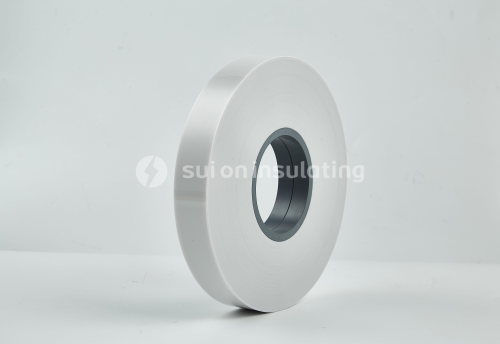
Why Consistency Matters for Mylar® Insulation
Mylar® polyester film is a biaxially oriented PET film valued for its mechanical strength, chemical stability, moisture resistance, and versatility. It is used in applications including electrical insulation, electronics, packaging, imaging, and other industrial products. DuPont documentation also identifies MYLAR® and MELINEX® polyester films as materials used in UL-recognized electrical insulation systems.
For manufacturers, however, having a well-known material is only the starting point. Thickness, dimensions, mechanical behavior, electrical characteristics, and processing suitability must remain appropriate for the specified application. A reliable supplier therefore needs controls that reduce variation from incoming material through final shipment.
Starting with the Right Material and Grade
Quality consistency begins before the film reaches a converting or insulation process. Mylar® is available in different grades and thicknesses, so suppliers need to identify the correct specification for the customer’s application rather than treating all polyester film as interchangeable.
Our product range illustrates this point. Mylar® A is available from 12 to 500 μm, while AHS1/KBS ranges from 23 to 130 μm. Mylar® EL ranges from 12 to 125 μm and emphasizes electrical and thermal properties. Mylar® MO ranges from 125 to 350 μm, with high electrical insulation strength, low shrinkage, low water absorption, and good heat resistance.
Controlling Thickness and Dimensional Consistency
For many insulation applications, thickness is a critical purchasing parameter. Excessive variation can affect clearances, winding arrangements, lamination thickness, or the fit of formed components. Suppliers therefore need appropriate measurement and inspection procedures to verify that delivered material corresponds with the agreed specification.
We provide Mylar® and Melinex® polyester films as sheets and rolls, with the listed standard width ranging from 1,000 to 1,450 mm. Available grades cover substantially different thickness ranges, so we match the requested material configuration with the specific application and purchasing requirement.
Using Quality Management Systems
A strong quality management system provides the framework behind consistent supply. ISO explains that ISO 9001 establishes requirements for a quality management system and is intended to help organizations consistently provide products and services that meet customer and applicable regulatory requirements. It also addresses monitoring, measurement, performance evaluation, and continual improvement.
We list ISO 9001, ISO 14001, and IATF 16949 among the system certifications associated with our Mylar® special film/Melinex® offering. These should be understood as management-system credentials rather than proof that every individual roll automatically meets every possible application requirement. Product conformity still needs to be verified against the applicable specification.
Inspecting More Than Appearance
Visual inspection is useful for identifying obvious surface defects, contamination, damage, or handling problems, but quality control for industrial insulation should not stop there. Depending on the grade and application, suppliers may need to evaluate dimensions, physical properties, electrical performance, and other characteristics specified for the material.
This distinction matters because a film can appear acceptable while still failing a critical technical requirement. DuPont technical documentation, for example, distinguishes between typical physical and electrical properties and formal product specifications, noting that typical laboratory values should not automatically be treated as product specifications.
Maintaining Traceability and Documentation
Traceability gives manufacturers a practical way to connect delivered material with its specification and quality records. For business buyers, clear documentation can simplify incoming inspection, production troubleshooting, supplier audits, and repeat purchasing.
Our listed Mylar® special film/Melinex® information includes UL Number E93687, RoHS, REACH, and MSDS-related environmental documentation, along with product grade, thickness, application information, width, packaging, and sample availability.
We see this documentation as part of the purchasing process rather than an administrative afterthought. When specifications and supporting information are clearly identified, engineering and procurement teams can make more informed decisions.
Matching Quality Control to the Application
Different applications place different demands on polyester film. Our listed Mylar® and Melinex® products are used in transformers, motors, generators, optics, photovoltaics, busbars, laminating, and casing applications. Some grades are also designed for specific uses, such as copper-wire wrapping, compressor motors, printing, and lamination.
Consequently, Mylar® film suppliers should understand how customers will process and use the material. A specification suitable for one application may not be the right choice for another. We focus on the intended operating and processing conditions when helping customers select an appropriate Mylar® insulation solution.
Supporting Insulation Needs in New Energy Vehicles
The same application-focused approach is relevant to new energy vehicles (NEVs), where electrical insulation materials are used in components exposed to demanding electrical and thermal conditions. Mylar® polyester film can be considered for insulation-related applications in motors, transformers, busbars, and other electrical assemblies where a thin, stable dielectric material is required. Its combination of mechanical strength, moisture resistance, and electrical insulation properties can help support compact component designs.
For NEV manufacturers and component suppliers, material consistency is particularly important because repeated production involves tightly controlled dimensions and processing conditions. Selecting the appropriate Mylar® grade and maintaining consistent thickness and physical properties make it easier to keep under control variation across production batches. We therefore consider the component design, operating environment, and processing method when supporting customers seeking Mylar® insulation for new energy vehicle-related applications.
Building Confidence Through Consistent Supply
Consistent quality does not come from one inspection or one certificate. It comes from controlling the material grade, specifications, production process, inspection practices, documentation, and customer requirements as one connected system. ISO likewise emphasizes process control, performance evaluation, and continual improvement as important elements of quality management.
At Sui On Insulating, this principle is reflected in how Mylar® insulation materials are specified and supplied. Clearly defining grades and specifications and supporting customers with appropriate technical information, we aim to make material selection more predictable for industrial buyers. For applications ranging from conventional electrical equipment to new energy vehicle components, choosing a supplier with a disciplined quality approach can be as important as choosing the film itself.