


 HOME >
 Global Demand Trends for Mylar Specialty Films in the US Market
The demand for high-performance polyester films is being shaped by several industries at once, from electrical equipment and electronics to photovoltaics and advanced manufacturing. As such applications become more demanding, material buyers increasingly need films that combine mechanical strength, insulation performance, dimensional stability, and environmental resistance. We see this trend reflected in the growing relevance of Mylar® specialty films US applications, particularly where reliable electrical insulation is essential.
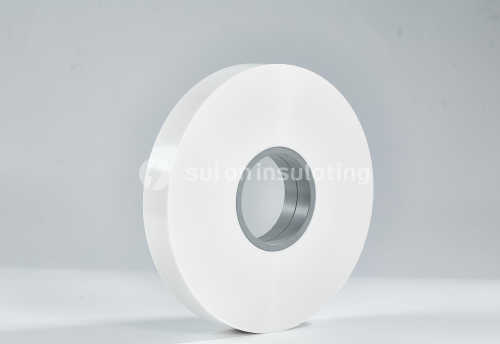
Global Trends Are Increasing Demand for Specialty Polyester Films
Specialty films are no longer limited to traditional packaging applications. According to S&P Global Commodity Insights, global specialty-film consumption reached approximately 7.2 million metric tons in 2024, with sales of about $26.3 billion. The United States ranked among the major consuming markets, while industrial and packaging applications remained important end markets for engineering films.
For us, this broader trend highlights an important point: buyers increasingly evaluate polyester films according to application-specific performance rather than simply price or thickness. Electrical equipment, electronics, automotive systems, and renewable-energy technologies can all require different combinations of insulation, strength, heat resistance, and processing characteristics.
Why Mylar® Insulation Remains Relevant to Electrical Applications
Electrical insulation is one of the most established applications for polyester film. Mylar® polyester film is a biaxially oriented polyester film produced from polyethylene terephthalate (PET). Its combination of tensile strength, chemical stability, and moisture resistance makes it suitable for demanding industrial uses.
We at Sui On Insulating supply Mylar® special film and Melinex® grades for applications including transformers, motors, generators, photovoltaics, and bus bars. Our portfolio includes several grades designed around different performance requirements, allowing engineers to select materials according to the construction and operating conditions of their equipment.
This versatility is particularly important for business buyers. A film used for electrical insulation may need different characteristics from one intended for lamination, imaging, or another industrial process. Selecting the correct grade can therefore be more important than simply choosing a generic PET film.
The US Market Is Being Supported by Domestic Solar Expansion
Solar manufacturing is an important factor behind future demand for specialty films in the United States. The U.S. Department of Energy identifies photovoltaic modules as assemblies containing multiple components, including cells, encapsulants, glass, backsheets, junction boxes, connectors, and frames. This creates demand across a broad manufacturing supply chain rather than for cells alone.
The DOE has also highlighted the need to expand domestic solar manufacturing capacity as U.S. solar deployment grows. Its analysis previously estimated annual domestic PV demand of around 50 GW from 2025 through 2030, while emphasizing continued growth in domestic manufacturing.
For material suppliers and module manufacturers, this development creates opportunities for insulation films and other specialty materials. We therefore consider photovoltaics an important application when discussing the future role of Mylar® specialty films US customers may require.
Mylar® Specialty Films US Buyers Need More Grade Flexibility
Different industrial processes require different film specifications. Our Mylar® and Melinex® portfolio reflects this reality. Mylar® A is available in thicknesses from 12 to 500 μm, while Mylar® EL ranges from 12 to 125 μm and is described as a tough polyester film with superior electrical and good thermal properties.
For applications requiring stronger electrical insulation, Mylar® MO is available from 125 to 350 μm and features high electrical insulation strength, low shrinkage, low water absorption, and good heat resistance. Melinex® S ranges from 50 to 520 μm and supports applications in electronics, laminating, and other industrial processes.
Supporting Insulation Requirements in New Energy Vehicles
The same material-selection principles extend naturally to new energy vehicles (NEVs), where electrical components require dependable insulation within compact assemblies. Mylar® polyester film can be used in insulation-related applications involving motors, busbars, and other electrical components, where mechanical strength and dielectric performance are important.
For NEV manufacturers and component suppliers, consistent film thickness and predictable processing characteristics can also support repeatable production. We therefore consider the component structure and operating conditions when helping customers select an appropriate Mylar® grade for vehicle-related electrical applications.
Environmental and Compliance Considerations Are Also Growing
As industrial supply chains become more structured, buyers increasingly examine environmental and quality documentation alongside physical performance. Our Mylar® special film/Melinex® product information lists RoHS, REACH, and MSDS documentation, as well as ISO 9001, ISO 14001, and IATF 16949 system certifications.
Our listed product temperature resistance is 105–130°C, while the supplied product description also states a broader temperature-resistance range of -100°F to 300°F for Mylar® polyester film. Buyers should match the applicable temperature specification to the particular grade and application rather than treating the entire product family as identical.
Preparing for the Next Stage of Mylar® Specialty Film Demand
The global specialty-film market and expanding U.S. manufacturing landscape point toward continued opportunities for high-performance polyester materials. We at Sui On Insulating support this market with Mylar® special film and Melinex® grades covering multiple thicknesses and application requirements. Our portfolio serves electrical equipment, photovoltaics, electronics, and other industrial applications.
For buyers seeking better Mylar® insulation, the most effective approach is to begin with the actual application requirements and then select the appropriate grade, thickness, and processing format. As demand becomes more technically driven, that application-focused approach can help manufacturers build reliable products while preparing for the evolving requirements of the US specialty-film market.