


 HOME >
 Avoiding Critical Errors in Processing and Deploying Nomex® Material
In modern high-temperature electrical engineering, dielectric material selection directly determines long-term equipment reliability. While meta-aramid synthetic papers offer unmatched flame resistance and dielectric stability, processing or handling errors during assembly can compromise performance, leading to premature dielectric breakdown in severe industrial operating environments.
At Sui On Insulating, our technical support specialists analyze common application mistakes across transformer, electric motor, and generator manufacturing. Proper handling, precise composite selection, and accurate mechanical converting preserve meta-aramid paper integrity, ensuring full electrical protection throughout the extended service life of industrial power assets.
Misjudging Thermal Limits and Material Grades
A frequent error in heavy electrical equipment design involves misjudging specific thermal grade limitations of flexible dielectrics. Although standard Nomex® insulation operates exceptionally up to Class R (220°C) limits, selecting uncalibrated sheet thicknesses under severe short-term thermal spikes risks localized structural degradation.
Assuming all aramid papers perform identically across different environment types creates hidden operational risks. Dense uncalibrated aramid sheets differ significantly in porosity and fluid absorption compared to calendered variants, directly impacting resin penetration during vacuum pressure impregnation in high-voltage transformer coil assemblies.
Neglecting Moisture Control and Storage Requirements
Failing to maintain ambient humidity controls prior to manufacturing assembly represents another major error when handling Nomex® material. Synthetic meta-aramid fibers naturally absorb ambient moisture from humid factory air if left exposed without protective sealed packaging in raw inventory storage facilities.
Excess absorbed moisture severely diminishes immediate breakdown voltage strength during initial factory electrical testing. Furthermore, trapped water vapor inside tightly wound transformer coils causes rapid steam expansion during thermal drying cycles, creating internal micro-delaminations within custom multi-layer aramid composite structures.
Excessive Mechanical Stress and Minimum Bend Radius Violations
Excessive mechanical bending represents a severe physical hazard during slot liner insertion or armature coil wrapping. Exceeding recommended minimum bend radii causes micro-fracturing along tight fold lines, drastically reducing the native dielectric breakdown strength of Nomex® insulation material in high-stress mechanical zones.
Improper roll slitting techniques also induce micro-tears along cut material edges during initial processing. When dull slitting blades compress roll margins without clean shearing action, localized stress points form along the border, triggering catastrophic edge tearing during automated high-tension coil winding processes on production floors.
Incorrect Laminate Composite Selection
Misaligning composite laminate choices with operating equipment temperatures often yields unexpected physical material failures. Deploying Nomex®-Mylar®-Nomex® (NMN) triplex laminates above Class H (180°C) thermal thresholds may expose thecentral polyester film to significant thermal degradation, even with the protection afforded by the outer aramid layers.
Conversely, specifying Nomex®-Kapton®-Nomex® (NKN) for lower thermal classes unnecessarily inflates raw manufacturing expenses. Our engineering team at Sui On Insulating analyzes dielectric stress profiles and thermal ratings to recommend optimal flexible composite structures, balancing high-temperature protection with cost-effective manufacturing efficiency.
Varnish Incompatibility and Edge Contamination
Inadequate resin compatibility testing during vacuum pressure impregnation (VPI) compromises total insulation system integrity. Improper varnish selection or insufficient impregnation duration leaves unfilled internal void spaces, triggering harmful partial discharge under continuous high-voltage operating stress inside heavy industrial motors.
Edge contamination during handling or raw material storage further jeopardizes physical dielectric performance. Metallic dust particles, industrial oils, or surface moisture on cut margins diminish tracking resistance, creating conductive paths along phase insulation boundaries in high-voltage rotating electrical machinery.
Best Practices in Material Storage and Handling
Establishing strict climate-controlled inventory storage prevents moisture absorption before final equipment assembly. Keeping unopened material rolls sealed in original packaging and allowing raw materials to thermally equalize before unsealing preserves physical properties and dielectric performance across all production batches.
Utilizing specialized converting services ensures clean edge slitting, uniform multi-layer lamination, and accurate die-cutting without mechanical stress. Professional conversion greatly reduces edge burrs and micro‑fractures, supporting smooth automated coil winding and rapid armature slot insertion in modern factory operations.
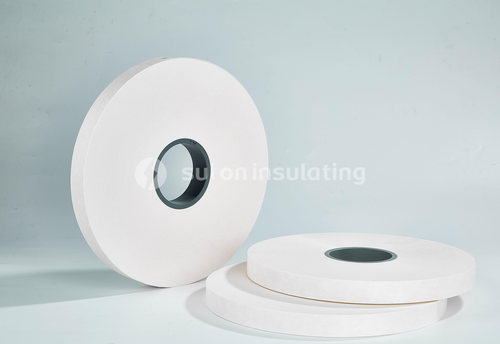
Our converting team at Sui On Insulating transforms master rolls of high-grade arclin Nomex® insulation into pre-slit coils, crease-formed slot liners, and die-cut phase barriers. Custom pre-fabricated components eliminate manual handling errors, maintaining pristine dielectric cleanliness and exact dimensional consistency.
Strict Quality Control and Verification Standards
Skipping incoming raw material inspection creates unnecessary risks in high-voltage electrical asset production. Equipment manufacturers must verify lot traceability, factory test reports, and physical thickness uniformity across every incoming batch of flexible Nomex® material before releasing inventory into assembly lines.
Performing routine breakdown voltage tests on incoming material rolls confirms consistent dielectric strength across shipments. Rigorous quality management protocols catch material variations early, preventing costly field failures, unexpected equipment downtime, and high warranty claims across industrial electrical installations globally.
Standardized testing protocols should also evaluate tensile strength and elongation metrics prior to full-scale fabrication. Verifying mechanical tolerances ensures converted sheets withstand automated tension forces during winding, helping verify that converted materials meet the required mechanical specifications for demanding electrical equipment applications.
Summary of Processing Standards for Long-Term Reliability
Correct application methodology combined with expert converting maximizes the operational service life of flexible high-temperature dielectrics. Eliminating common storage, bending, and lamination mistakes guarantees superior heat dissipation, exceptional breakdown voltage resistance, and robust mechanical containment in demanding heavy machinery.
As global power grids and electric transportation architectures demand higher power densities, avoiding processing errors becomes essential. Precise material specification and professional converting standards ensure long-term electrical asset safety, high operating efficiency, and reliable performance across global power environments.