


 HOME >
The automotive industry increasingly relies on high-performance insulation materials to ensure safety, efficiency, and longevity. At Sui On Insulating, we have spent over 40 years specializing in automotive insulation solutions. Our company focuses on delivering reliable materials that meet the rigorous demands of electric vehicles, transformers, and industrial motors. The evolution of automotive insulation material has introduced a wide range of options, and we believe it is essential to understand both their advantages and limitations.
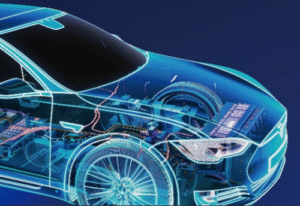
Advantages of Advanced Automotive Insulation
We have observed that high-quality automotive insulation materials provide critical protection against electrical faults and thermal stress. For instance, in our vehicle drive systems, products like Nomex®® aramid paper and SOFLEX NSN laminated paper offer excellent thermal, chemical, and mechanical resistance. These materials ensure conductors remain isolated from each other and the iron core, preventing breakdowns in high-voltage systems. Additionally, insulation materials with high thermal conductivity improve heat dissipation, supporting the efficiency of electric motors. Our team emphasizes the ability to quickly adapt and develop new solutions, such as accommodating chemical resistance for cooling media and enhanced partial discharge resistance, which is crucial for modern automotive applications.
Potential Limitations to Consider
Despite their benefits, automotive insulation options are not without challenges. Some advanced materials, like PEEK or specialized laminated composites, may require precise manufacturing processes, which can increase production complexity. At Sui On Insulating, we mitigate these challenges by offering a comprehensive set of production and testing equipment, ensuring consistency and quality. Another consideration is cost: high-performance insulation materials can be more expensive than conventional alternatives. However, the long-term reliability and reduction in maintenance issues often justify the investment. We ensure that our solutions balance performance with practicality, making them suitable for both standard and high-voltage vehicle systems.
Real-World Applications and Insights
In practice, our automotive insulation material solutions are widely used across various vehicle drive systems. We utilize DuPont Nomex®® for slot insulation, turn-to-turn insulation, and phase-to-phase insulation, combined with SOFLEX NHN, NKN, and NSN composite papers for specialized requirements. RELATS VSC sleeves and Kevlar binding wires are applied for lead-out insulation and coil binding, while Axalta Voltatex® varnishes provide excellent stator sealing. These materials support lightweight, high-efficiency motor designs, contributing directly to energy savings and vehicle performance. By maintaining a one-stop solution approach, we streamline procurement, reduce lead times, and provide engineers with dependable insulation materials that integrate seamlessly into their systems.
Conclusion: Balanced Evaluation for Informed Decisions
At Sui On Insulating, we understand that choosing the right automotive insulation solution involves weighing both benefits and drawbacks. Advanced insulation materials improve safety, thermal management, and efficiency, but they require careful handling and may involve higher costs. Our company leverages decades of expertise, robust R&D, and full-scale production capabilities to provide insulation solutions that meet these challenges effectively. We believe that informed decision-making, guided by detailed material knowledge, ensures optimal performance for electric vehicles, industrial motors, and other high-demand applications. Our commitment remains to provide consistent, high-quality automotive insulation material that supports innovation and reliability in every system we touch.