


 HOME >
 Automotive Insulation Material Pricing Analysis: Key Factors Influencing Costs
Price is only one part of the purchasing decision when we spot automotive insulation materials. For electric vehicle drive systems, insulation must withstand high temperatures, electrical stress, mechanical forces, and exposure to cooling media while supporting compact motor designs. The wider adoption of a and b is diversifying material requirements. At Sui On Insulating, we help OEMs evaluate these requirements while balancing technical performance with overall material cost.
Why Automotive Insulation Costs Are Changing
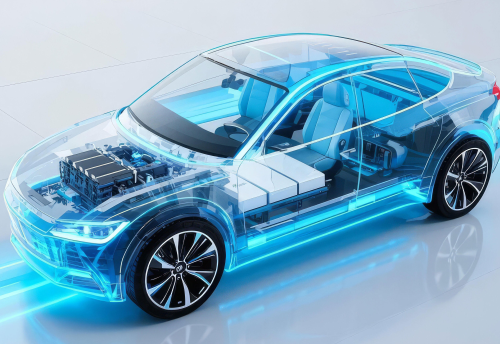
The transition toward electrified vehicles is changing the role of insulation inside the drive system. Traction motors increasingly operate at high speeds and higher electrical voltages, while oil-cooled systems and flat-wire windings introduce additional chemical and thermal considerations. DuPont notes that 800V architectures can enable higher charging power and faster charging, while advanced inverter technologies such as SiC can operate at higher switching frequencies.
These developments can increase the performance requirements placed on insulation. As a result, automotive insulation material prices cannot be evaluated simply by comparing the cost per kilogram or square meter. We need to consider whether a material can meet the application’s electrical, thermal, mechanical, and chemical requirements.
Material Type Is a Primary Cost Factor
The basic material chemistry has a direct influence on price. Conventional polyester films can provide useful electrical insulation at relatively competitive costs, while higher-performance materials such as polyimide, aramid paper, PEEK, and engineered composites generally serve more demanding applications.
For example, Sui On Insulating offers automotive drive-system solutions based on Arclin (formerly DuPont) Nomex® aramid paper and polyimide films for thermal and mechanical protection. We also provide SOFLEX® NSN composite materials and PEEK materials for applications where higher performance requirements, including partial-discharge resistance and chemical compatibility, become important.
The key purchasing question is therefore not simply “Which material costs less?” Instead, we ask whether the selected material provides the required performance without adding unnecessary material cost to the design.
Thermal Class Influences Automotive Insulation Material Price
Temperature resistance is another important cost driver. Higher-performance insulation materials are generally required when motors operate under greater thermal stress. The appropriate thermal class depends on the insulation system and application conditions rather than simply on the maximum temperature listed for an individual material.
Our automotive insulation portfolio includes solutions for different thermal requirements. Sui On Insulating describes Class H materials such as Nomex® aramid paper, polyimide films, SOFLEX® NHN, and SOFLEX® NKN for demanding automotive applications. Class N materials, including SOFLEX® NMN and SOFLEX® NSN, can serve applications where their specific performance characteristics are sufficient.
This distinction allows us to avoid over-specifying materials. Selecting the highest-cost material for every component may increase the bill of materials without delivering a meaningful engineering benefit.
Voltage and Partial Discharge Requirements
Higher-voltage drive systems create another layer of cost consideration. Insulation must maintain electrical separation while resisting the effects of electrical stress. Partial discharge is particularly important because repeated discharge activity can contribute to insulation deterioration over time. DuPont identifies corona-resistant polyimide films for motor and magnet-wire applications where partial-discharge environments can occur.
For 800V systems, we therefore consider electrical performance alongside thickness, thermal requirements, and mechanical properties. Our SOFLEX® NSN and other advanced insulation solutions are positioned for applications requiring partial-discharge resistance. The additional performance can justify a higher material price when it contributes to system reliability or enables a more compact design.
Chemical Compatibility Adds Another Cost Dimension
Oil-cooled electric motors introduce requirements that may not exist in conventional dry insulation applications. The insulation needs to remain suitable when exposed to the cooling medium over the expected operating conditions. Chemical compatibility therefore becomes part of material selection rather than an afterthought.
Our automotive drive-system portfolio includes PEEK materials and SOFLEX® NSN composite paper for applications requiring compatibility with ATF cooling media. This type of specialized performance can affect material pricing because the supplier must provide a material designed for a more demanding environment.
For OEMs, the correct comparison is therefore between materials that can actually survive the intended environment, rather than between products with similar basic dimensions.
Thickness and Material Efficiency Affect Total Cost
A higher-performance insulation material does not automatically mean a higher total system cost. If its mechanical strength, dielectric performance, or thermal capability allows the design to use less material, the overall cost calculation can change.
This is particularly relevant to compact electric motors. DuPont’s automotive insulation work describes slot-liner solutions designed to protect copper while supporting heat dissipation and efficient motor operation.
We therefore evaluate thickness together with performance. A thinner, higher-performance material may sometimes provide a more economical solution than a thicker lower-cost material if it saves space, simplifies assembly, or improves motor design efficiency.
Order Volume and Manufacturing Scale Matter
Purchase volume is another practical factor affecting automotive insulation material pricing. Automotive OEMs and Tier suppliers often require repeatable supply at production scale, making roll dimensions, converting efficiency, packaging, logistics, and production yield relevant to the final quotation.
The broader EV industry also demonstrates how manufacturing scale can influence costs. The IEA reports that economies of scale, supply-chain access, manufacturing efficiency, and experience are important contributors to electric-vehicle cost competitiveness.
For insulation procurement, this means buyers should consider annual demand and production requirements rather than comparing only small-quantity sample prices.
Processing and Conversion Should Be Included
The material price is only one component of the real cost. Slitting, die cutting, laminating, forming, and other conversion operations can add cost, particularly when tight dimensional tolerances or custom configurations are required.
At Sui On Insulating, we consider the intended manufacturing process when discussing automotive insulation. A material that is easy to process and supplied in a suitable format may reduce production labor, scrap, and handling costs even if its initial unit price is not the lowest available.
This is why we encourage OEMs to evaluate total material cost rather than purchase price alone.
Balancing Performance and Price at Sui On Insulating
We at Sui On Insulating believe the best automotive insulation solution meets the actual engineering requirements and avoids over-specification. Our product range covers materials such as Nomex® aramid paper, polyimide films, SOFLEX® NSN composite paper, and PEEK, allowing us to consider different combinations of thermal, electrical, mechanical, and chemical requirements.
For OEMs developing high-voltage and high-speed drive systems, we focus on the complete cost equation. By matching material performance with operating conditions, thickness, processing requirements, order volume, and expected service life, we help customers make more informed sourcing decisions. Ultimately, effective automotive insulation is not about finding the cheapest material; it is about achieving the right balance between automotive insulation material cost, manufacturing efficiency, and long-term electrical reliability.