


 HOME >
Electric vehicles (EVs) are transforming the automotive industry with higher efficiency, lower emissions, and advanced power technologies. However, as battery systems, motors, and high-voltage components continue to evolve, safety challenges are becoming increasingly complex. Effective car insulation plays a crucial role in preventing electrical failures, managing heat, and improving the durability of EV systems. For manufacturers developing next-generation electric vehicles, selecting reliable insulation materials is essential for achieving safer and more efficient designs.
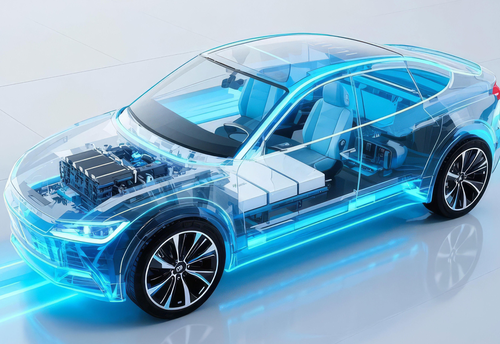
The Importance of Car Insulation in EV Safety Systems
Electric vehicles operate with high-voltage electrical architectures that require advanced protection against electrical leakage, overheating, and component damage. Unlike traditional vehicles, EVs rely heavily on battery packs, drive motors, and power electronics, where insulation performance directly affects vehicle safety.
High-quality automotive insulation creates a protective barrier between conductive components, helping prevent short circuits and electrical breakdown. It also supports thermal management by maintaining stable performance under high operating temperatures generated during charging, acceleration, and continuous driving.
As EV technologies move toward higher voltage platforms, such as 800V systems, insulation materials must provide stronger electrical resistance, improved durability, and reliable long-term performance.
How Automotive Insulation Protects EV Battery and Electrical Systems
The battery system is one of the most important components in an electric vehicle. Battery cells operate under strict electrical and thermal requirements, and any insulation failure can create serious safety risks.
Proper car insulation helps separate electrical components and reduces the possibility of current leakage between battery modules. It also helps reduce electrical fault risks and supports thermal management by maintaining stable performance under demanding operating conditions.
Beyond battery packs, insulation is also essential in other high-voltage areas, including motors, inverters, cables, and charging systems. Each component requires materials with specific electrical, mechanical, and thermal properties to ensure stable operation throughout the vehicle’s service life.
Advanced Insulation Requirements for EV Drive Motors
The drive motor is considered the “heart” of new energy vehicles, and its insulation system faces increasingly demanding requirements. Modern EV motors feature permanent magnet designs, high-speed operation, oil-cooled flat wire technology, and 800V high-voltage systems, all of which increase insulation challenges.
For these applications, automotive insulation materials must combine high thermal conductivity, partial discharge resistance, mechanical strength, and compatibility with cooling media.
At Sui On Insulating, we provide comprehensive insulation solutions for EV drive systems. Our product range includes Arclin (formerly DuPont) Nomex® (hereinafter referred to as “Nomex®”) aramid paper, polyimide films, SOFLEX® NSN composite paper, and PEEK materials designed to support high-voltage and high-performance motor applications.
These materials help manufacturers improve motor reliability while addressing the technical demands of modern electric vehicle development.
Key Insulation Materials Used in EV Motor Applications
Different motor components require different insulation solutions. Selecting the correct material helps manufacturers achieve optimal electrical performance and production efficiency.
For slot insulation, turn-to-turn insulation, and phase-to-phase insulation, we supply solutions including NOMEX® 410, NOMEX® 710, SOFLEX® NHN composite paper, SOFLEX® NKN composite paper, SOFLEX® NMN composite paper, SOFLEX® NSN composite paper, PEEK film, and foamed materials.
Slot wedge insulation applications commonly use fiberglass boards, Bakelite boards, and SOFLEX® composite paper to provide reliable mechanical support and electrical separation.
For lead-out insulation, RELATS VSC Sleeve provides effective protection, while RELATS PPS NOMEX® and Kevlar binding wire solutions support coil binding requirements. These specialized materials allow EV manufacturers to build motors with improved durability and operational stability.
Thermal and Chemical Resistance for Next-Generation EV Systems
As electric vehicle technology advances, insulation materials must withstand more challenging environments. High-speed motors and oil-cooled systems expose insulation components to heat, vibration, and chemical contact with cooling fluids.
Reliable automotive insulation materials need excellent chemical compatibility while maintaining electrical and mechanical properties over extended operating periods.
Sui On Insulating provides insulation solutions designed for demanding EV applications, including PEEK materials with strong high-voltage partial discharge resistance and ATF chemical compatibility. These advanced materials support manufacturers developing more powerful and efficient electric drive systems.
Additionally, our insulation solutions include Voltatex® products, such as Voltatex® 4440 and 4240 stator sealing adhesives, as well as Voltatex® 4200, 4201, and 4030 impregnating varnishes. These products help improve motor insulation systems and enhance overall reliability.
Choosing a Reliable Automotive Insulation Partner
The rapid growth of electric vehicles requires manufacturers to work with insulation suppliers that understand both material performance and automotive engineering requirements. A reliable supplier should provide not only high-quality materials but also technical support for evolving vehicle technologies.
At Sui On Insulating, we combine extensive insulation expertise with a broad product portfolio to support EV manufacturers worldwide. As a trusted supplier of automotive insulation solutions, we provide advanced materials for vehicle drive systems, including high-performance films, composite papers, and specialized insulation components.
Our commitment to quality, innovation, and fast solution development allows us to support customers as EV technology continues to advance. By delivering dependable car insulation solutions, we help manufacturers improve battery safety, motor reliability, and the long-term performance of next-generation electric vehicles.