


 HOME >
Industrial motors are essential components in modern manufacturing, supporting equipment such as compressors, pumps, conveyors, and heavy-duty machinery. As these motors operate under continuous loads, insulation performance directly influences efficiency, safety, and service life. Selecting the right motor insulation class is a critical decision for manufacturers because different operating environments require different levels of thermal resistance and durability.
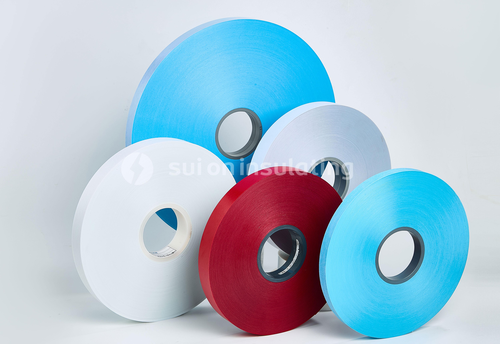
Understanding Motor Insulation Classes and Their Importance
Motor insulation systems are designed to protect windings and electrical components from heat, voltage stress, vibration, and environmental factors. The insulation class indicates the maximum temperature capability of the insulation material and helps engineers determine whether a motor can operate reliably under specific conditions.
Among various insulation classifications, Class F and Class H are two widely used options for industrial motors. Both provide reliable electrical protection, but they differ in thermal endurance and application suitability. Choosing between them depends on factors such as operating temperature, workload intensity, equipment design, and expected service life.
For manufacturers, selecting suitable motor insulation materials is not only about meeting technical requirements. It also affects maintenance costs, equipment reliability, and overall system performance.
Class F Motor Insulation: A Reliable Solution for Many Industrial Applications
Class F insulation is commonly used in industrial motors because it provides a strong balance between performance and cost efficiency. With a maximum operating temperature of 155°C, Class F insulation can support demanding applications where motors experience continuous operation and moderate thermal stress.
Motor class F insulation is often applied in industrial equipment such as pumps, fans, compressors, and production machinery. These applications require insulation systems that can withstand daily operation while maintaining stable electrical performance.
A properly designed Class F insulation system helps reduce the risk of insulation breakdown caused by heat accumulation. It also provides sufficient protection against mechanical stress and electrical aging, making it a practical choice for many general industrial motor applications.
Class H Motor Insulation: Designed for Higher Thermal Demands
Class H insulation is developed for applications that require greater heat resistance and enhanced reliability. With a thermal endurance capability of 180°C, Class H insulation is suitable for motors operating under higher temperatures, heavier loads, or more challenging environmental conditions.
Industries such as renewable energy, electric vehicles, heavy machinery, and high-performance manufacturing often require advanced insulation systems. These applications may involve frequent starts and stops, increased power density, or limited cooling conditions.
By using high-performance motor insulation materials designed for Class H systems, manufacturers can improve motor durability and reduce the risks associated with excessive thermal stress. This makes Class H insulation an ideal choice when long-term reliability is a priority.
Key Differences Between Class F and Class H Insulation Systems
The main difference between Class F and Class H insulation is their temperature resistance. The primary difference between Class F and Class H insulation is their thermal endurance capability. However, material structure and application conditions should also be considered.
However, temperature capability is not the only consideration. Material structure, mechanical strength, dielectric properties, and application requirements also influence insulation performance.
For example, a motor operating in a stable environment with moderate loads may achieve excellent reliability with Class F insulation. However, a motor exposed to high temperatures, frequent overloads, or limited ventilation may benefit from Class H insulation.
Choosing the appropriate insulation class allows manufacturers to balance performance requirements with production costs while ensuring reliable motor operation.
Selecting the Right Motor Insulation Materials for Your Application
Beyond insulation classification, the quality of the insulation material itself plays an important role. Industrial motors require materials that can maintain electrical and mechanical performance throughout their service life.
At Sui On Insulating, we provide high-performance electric motor insulation materials, including Arclin (formerly DuPont) Nomex® (hereinafter referred to as “Nomex®”) aramid papers and SOFLEX® composite laminates, designed to support demanding industrial applications. Our solutions cover complete electric motor winding insulation requirements, including slot insulation, layer insulation, and interphase barriers.
For applications requiring motor class F insulation or higher, our SOFLEX® NHN and NMN composite insulation materials provide reliable thermal performance. SOFLEX® NHN supports Class H insulation systems with a temperature resistance of 180°C, while SOFLEX® NMN provides Class F insulation performance at 155°C.
These composite materials combine strong electrical insulation properties with excellent mechanical stability, helping manufacturers improve motor reliability in high-load environments.
Why Partner with an Experienced Insulation Supplier
Selecting insulation materials requires more than choosing a product with the correct temperature rating. Manufacturers need a supplier that understands application challenges and can provide customized support.
At Sui On Insulating, we focus on developing, producing, and supplying insulation solutions for motors, generators, transformers, electronic products, and new energy vehicles. As one of the leading insulation solution providers in China, we support customers with both high-quality materials and professional processing services.
Our capabilities include stamping, laminating, gluing, CNC machining, and 3D molding. These services help customers integrate insulation components more efficiently into their production processes while maintaining consistent quality.
Building More Reliable Motors with the Right Insulation Choice
The selection between Class F and Class H insulation depends on the specific requirements of each motor application. While Class F insulation provides reliable performance for many industrial environments, Class H insulation offers additional thermal protection for more demanding operating conditions.
With extensive experience in motor insulation solutions, Sui On Insulating helps manufacturers choose suitable materials for different performance requirements. By combining advanced insulation products, technical expertise, and customized processing services, we support businesses in building safer, more efficient, and longer-lasting industrial motors.