


 HOME >
In my four decades of working within the electrical insulation industry, I have observed a recurring challenge for our B2B partners: the critical nature of material selection in high-stakes environments. At Sui On Insulating, we consistently emphasize that industrial longevity begins with the raw material. When addressing the needs of power grids, data centers, and advanced automotive systems, the margin for error is non-existent. One material that continues to serve as a benchmark for versatility and reliability is Mylar®—a high-quality PET film that has become an essential component for engineers worldwide.
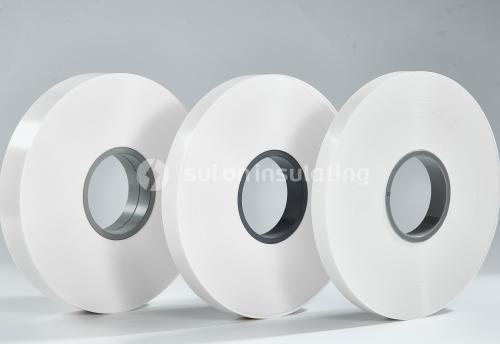
Understanding the Role of Mylar insulation
For those of us managing complex electrical systems, the selection of mylar insulation is rarely about choosing the cheapest option. It is about understanding the balance between dielectric strength, thermal stability, and mechanical toughness. Mylar®, originally pioneered by the experts at the organization now known as Arclin (formerly DuPont), offers a unique combination of physical properties that make it indispensable. Unlike general-purpose plastics, Mylar® film maintains its structural integrity under rigorous conditions, including high humidity and fluctuating temperatures.
When I consult with our industrial clients at Sui On Insulating, I frequently explain that Mylar® is essentially a biaxially oriented polyethylene terephthalate film. This manufacturing process grants the material exceptional tensile strength and dimensional stability. In practical terms, this means that even when exposed to 155°C—a standard operating threshold in many electric motors—the film does not easily warp or lose its insulating capability. Furthermore, its resistance to water absorption makes it a superior choice for environments where moisture-related failure is a primary concern.
Key Considerations for Sourcing a mylar film roll
Procuring a mylar film roll requires more than just a purchase order. For procurement managers and project engineers, it is vital to evaluate the specific technical requirements of the final application. We at Sui On Insulating have spent years refining our supply chain to ensure that we provide only the highest grade of PET films. When you are looking to source this material, several technical parameters must be verified against your project specifications.
First, consider the thickness uniformity. In precision applications, such as slot insulation for rotors or stators, a variation of even a few microns can impact the overall efficiency of the motor. A premium mylar film roll should feature consistent thickness across the entire width. At Sui On Insulating, we perform rigorous incoming quality checks to ensure that the materials we convert meet these precise tolerances.
Second, evaluate the electrical breakdown voltage. The primary purpose of mylar insulation is to prevent electrical arcing and short circuits. Therefore, the dielectric strength is the most critical spec to review on the material’s data sheet. You should verify that the material is certified for the specific voltage class required by your equipment. Our team often assists clients in interpreting these specs to ensure that the chosen Mylar® thickness aligns perfectly with their insulation coordination requirements.
Why Engineering Teams Choose Sui On Insulating
Navigating the complexities of industrial material sourcing is where the expertise of Sui On Insulating becomes a tangible asset for your firm. With over 40 years of specialized experience, we do not just act as a supplier; we function as an extension of your technical team. We understand that in the energy and automotive sectors, downtime is a massive cost driver. By providing high-quality, pre-tested, and precision-converted insulation materials, we help you eliminate the uncertainty associated with sub-standard supplies.
Our process at Sui On Insulating is designed for the modern B2B landscape. We offer customized slitting and conversion services, ensuring that your Mylar® arrives ready for the assembly line. Whether you are dealing with large-scale transformer manufacturing or small-batch electric vehicle motor prototypes, our service infrastructure is built for speed and precision. We recognize that the demand for high-performance insulation is fluctuating, and we maintain robust inventory levels to ensure that your production schedules remain uninterrupted.
Ensuring Long-Term Reliability
The durability of your final product—whether it is a heavy-duty transformer or an industrial fan motor—is largely dictated by the materials buried deep within the core. By opting for a high-grade Mylar® solution from Sui On Insulating, you are investing in the long-term reliability of your assets. Mylar® is well-known for its excellent resistance to chemicals and solvents, meaning that even in chemically aggressive manufacturing environments, your internal insulation will remain intact.
Additionally, because Mylar® is naturally resistant to UV light and oxidation, it maintains its mechanical properties even after years of continuous operation. This “set it and forget it” reliability is exactly what our clients in the power distribution sector demand. When you purchase from Sui On Insulating, you are receiving a material that has been curated for excellence, backed by our commitment to technical support and quality assurance.
As you look toward optimizing your next project, remember that the smallest component often carries the highest risk. By carefully selecting your mylar film roll based on dielectric strength, thermal resistance, and mechanical resilience, you ensure that your industrial applications are protected against the rigors of modern operation. I invite you to reach out to our team at Sui On Insulating to discuss your technical specifications. We are prepared to provide the materials and the expertise required to keep your operations running at peak efficiency, year after year.